

Health, family & informal care
A diagnosis is entered in one person's medical record. Yet someone collects the medication, accompanies them to appointments, makes up for lost income, and shares the uncertainty at night. Illness does not have to tear every family apart. But it often redistributes its time, work, money, and responsibility.
1. A Diagnosis Has One Name. Care Has Many Addresses.
In hospital, the patient is the focus of attention. That is as it should be: the patient undergoes examinations, bears the symptoms, makes decisions about treatment, and has a right to privacy. Back at home, however, the health event branches out. Someone changes their work shifts. Someone takes over shopping, cooking, or childcare. Someone manages the appointment calendar, monitors medication supplies, arranges transport, and deals with public authorities. Another family member contributes money but lives far away. Someone else refuses to help or is unable to offer it.
This is where informal care begins: assistance provided by a partner, parent, child, other relative, friend, or neighbour outside a paid professional service. It is not limited to personal hygiene and serving meals. It also includes supervision, transport, housework, errands, managing finances, emotional support, or coordinating several services. The Czech Ministry of Labour and Social Affairs therefore explicitly points out that an informal carer need not be a member of the immediate family.[1]
It is important not to confuse three different things. Illness does not automatically mean a loss of self-sufficiency. Assistance does not automatically mean complete dependency. And family involvement does not automatically mean that the patient loses the right to make decisions. Good care does not begin by taking control, but by asking what the person genuinely needs, what they want, and what they can continue to do for themselves. A family should provide support, not become an invisible extension of an institution.
At the same time, we cannot pretend that organising treatment ends when a patient leaves the doctor's office. Some of the work merely moves into the home. If the system does not name it, it does not disappear. It becomes unpaid, difficult to measure, and often concentrated on one person.
2. How Many People Does Care Really Affect?
There is no single universal figure because surveys measure different groups, levels of intensity, and periods of time. Some count regular help provided at least once a week; others count care lasting for months; still others include people who provided care at some point in the previous five years. Any honest comparison must therefore state the definition being used.
The Czech Ministry of Labour and Social Affairs' current information page says that one in five adults in Czechia had provided at least 20 hours of care a week for a loved one at some point during the previous five years.[1] The underlying 2024 survey included 3,203 respondents from the general population. Of these, 1,281 reported experience of caring; 76 percent of that group described care lasting more than a year and requiring at least 20 hours a week. A follow-up questionnaire was completed by 717 informal carers.[2] This is not the number of people providing care today. It is an experience within a defined period under a particular research definition.
The Czech Statistical Office offers a different perspective. In 2024, 1.313 million people aged 15 and over living in Czech households had a disability under the survey's methodology—15 percent of that population. Sixty-three percent received help from another person; for 98,000 people, the help provided was insufficient or not yet available. The survey was conducted in households and does not automatically cover everyone who is ill or people living in residential institutions.[3]
In a 2025 report, Eurofound estimates that between 16 and 21 percent of the EU population provide unpaid long-term care, depending on the survey and definition used. The range is not a flaw in the data; it is a warning that “carer” is not one sharply defined administrative category. Some people do not even consider themselves carers because they see helping a parent or partner as something that goes without saying. Eurofound describes this phenomenon as hidden care.[4]
The conclusion shared by these sources is more robust than any one striking figure: long-term illness and reduced self-sufficiency are not marginal private events. They affect a large proportion of households, and a significant share of practical assistance remains outside paid services.
3. The Second Shift That Does Not Fit into a Doctor's Appointment
Care is easy to underestimate when it is divided into individual small tasks. Ten minutes for a phone call. Half an hour at the pharmacy. A journey to an appointment. One extra load of laundry. Help with showering. Filling in an application. Reassuring someone who is afraid. Each item appears manageable. Only their total reveals a second shift with no fixed beginning, end, or commute home.
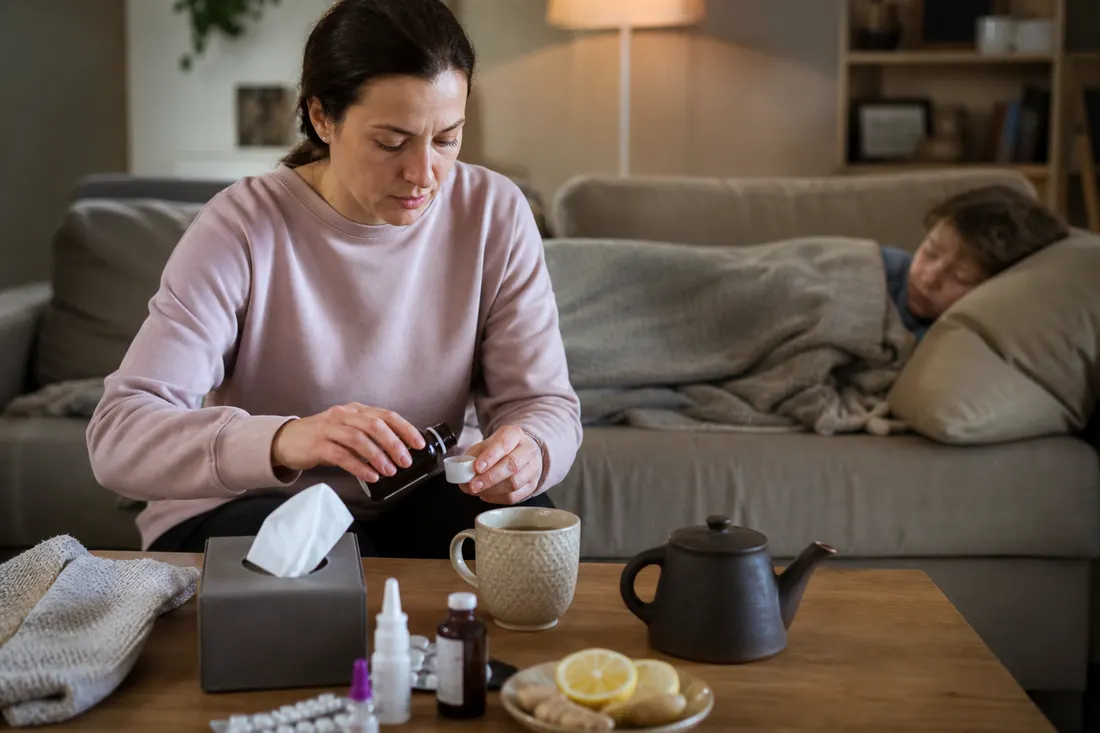
In the Czech Ministry's survey, carers provided an average of 29 hours of care per week—roughly three quarters of a standard full-time job. But averages conceal differences. The group classified by the researchers as overburdened carers accounted for 30 percent of respondents; they provided an average of 35 hours of care a week, and 42 percent said they had virtually no rest. One quarter of carers were managing alone.[2]
The European data use a different methodology but reveal a similar burden on time. Eurofound found an average of 19.5 hours a week among people providing long-term care. Those simultaneously caring for a loved one with long-term needs and for their own children reported an average of 52.4 hours across all caring roles combined. These are conditional averages among carers, not the time spent by all Europeans, and they are derived from responses grouped into ranges. Even so, they vividly show why “just helping the family” can take as much time as another job.[4]
Additional time does not consist only of visible tasks. There is also being on call: the carer may not be doing anything at that moment, but cannot leave, switch off the phone, or sleep uninterrupted. There is coordination work: remembering what each specialist said, who is coming on Wednesday, and whether two recommendations conflict. And there is emotional labour: maintaining calm, explaining changes to children, absorbing the ill person's fear and anger, and regulating one's own worries at the same time.
That is why measuring only the minutes of direct assistance is not enough. Two families may report the same number of hours yet carry entirely different burdens depending on night-time supervision, the predictability of the condition, the availability of relief, or the relationship between the patient and the carer.
4. A Family Does Not Become a Healthcare Team Overnight
A diagnosis does not automatically confer professional knowledge on loved ones. Yet within days they may have to learn how to transfer a person with limited mobility, use assistive devices, care for a wound, administer prescribed treatment, or recognise when professional help must be called. Alongside this, they are expected to understand the health and social care systems, the Czech care allowance, employment rights, and insurance. Each area has different contacts, rules, and terminology.
In 2024, the Czech Ministry found a marked gap between awareness of help and its actual use. Sixty-six percent of people with caring experience knew about respite care, but only 11 percent reported having used it. Depending on the care recipient's level of dependency, advice from organisations focused specifically on carers was used by only about one tenth to one sixth of respondents. Roughly three in ten within this breakdown had used none of the listed consultations or forms of support.[2] These figures do not tell us that everyone needed a service and was denied it. They do show, however, that knowing a service's name is not the same as having available capacity, a suitable time, an affordable price, or the willingness to let a stranger into one's home.
A family also often stands between two systems. Healthcare deals with treatment, professional medical procedures at home, and rehabilitation. The social care system deals with assistance in everyday life, personal assistance, respite, or residential services. But a patient does not live in two separate columns. Their morning hygiene, medication, transport, and safety make up a single day.
WHO Europe therefore describes long-term care as a coordinated set of health, personal, and social services, not a single intervention. It recommends systems that also support informal carers and organise services around the individual's needs.[5] The practical implication is simple: a list of instructions is not enough at discharge. Someone must establish who can realistically carry them out at home, what needs to be practised, who will relieve the family, and whom they should contact if the person's condition changes.
5. Illness Enters Work Schedules, Careers, and the Family Budget
Care often takes place during years when loved ones are economically active. Eurofound reports that 61 percent of people providing unpaid long-term care also work for pay or are self-employed.[4] The conflict is therefore not merely between care and leisure, but between two legitimate responsibilities: being a reliable worker and being available to someone close.

In the Czech Ministry's survey, 18 percent of carers reported a deterioration in their financial situation, 12 percent had left employment or ended self-employment, and 11 percent had reduced their hours or scaled back their business. Individual answers could overlap, so these shares cannot be added together. Nor does the research prove that every change was caused exclusively by care. It does, however, describe respondents' experience in connection with their involvement in care.[2]
The household budget can deteriorate from both directions. Income falls because of shorter working hours, absences, or a job opportunity turned down. At the same time, expenses rise to cover transport, equipment, home adaptations, co-payments, meal delivery, or paid relief. Some costs are visible on the account. Others emerge only years later: slower career progression, lower savings and pension entitlements, or lost qualifications.
Czech law offers some carers tools for reconciling work and care. The Ministry's current guidance describes the conditions for requesting shorter or otherwise adjusted working hours, remote work, state-paid health insurance for defined groups, and the inclusion of certain periods of care in pension calculations. Eligibility is not universal for every diagnosis and every family situation; it depends, among other things, on the level of dependency, the form of care, and the employment relationship.[6]
That is why the phrase “the family will work something out” is dangerous. An arrangement within a household cannot solve shifts that cannot be moved, a missing regional service, or a loss of income that pushes the household into debt. Care is a relationship, but it is also infrastructure.
6. A Carer's Health Is Not a Private Luxury
Within the system, a carer tends to be visible as the person accompanying the patient. Their own health is addressed only when they break down. This is understandable on a human level and short-sighted in organisational terms. If the person carrying most of the home-care burden chronically lacks sleep, postpones their own medical examinations, or is physically unable to transfer the patient, both the carer and the continuity of assistance are at risk.
The Czech survey found the greatest difficulties among people on whom care had simply “fallen” and among those providing care alone. In the former group, 46 percent reported worse mental health and 38 percent worse physical health, compared with 23 and 15 percent among other carers. People providing care alone made up a quarter of all carers; two thirds of them were over 55, and two fifths of this group had been caring for more than seven years. The Ministry's summary reports a deterioration in both physical and mental health in roughly half of this group.[2]
These figures do not establish a simple cause. People who provide more intensive care may be older, have health conditions of their own, or have been in a worse financial position before care began. Eurofound therefore compared health while accounting for age, gender, education, country, and other available variables. Even after this adjustment, long-term care was associated with poorer self-reported health, and more hours with a worse outcome; the authors still speak of an association, not a certain causal effect for every individual.[4]
WHO Europe concludes that prolonged or intensive unpaid care can have adverse effects on physical, mental, and social health. Its proposed responses include respite care, training, counselling, service coordination, regular health checks, and financial support.[7] These are not luxuries for tired relatives. They help prevent a household from losing the one pillar holding it up.
The advice to “look after yourself too” is true, but without replacement care it can sound cruel. Rest is not a decision when there is no one to take over supervision. On its current page, the Czech Ministry recommends peer-support groups, professional psychological help, and regional support centres.[8] The corresponding systemic principle must be this: carers should have not only a duty to endure, but a genuine opportunity to stop for a while.
7. Not Everyone in a Family Carries the Same Load
A family is not automatically a cohesive team. Its members may live in different cities and have different incomes, health, and relationships with the ill person. One provides hands-on care, another sends money, and a third calls only occasionally. The dispute then concerns not only who helps, but what counts as help at all.
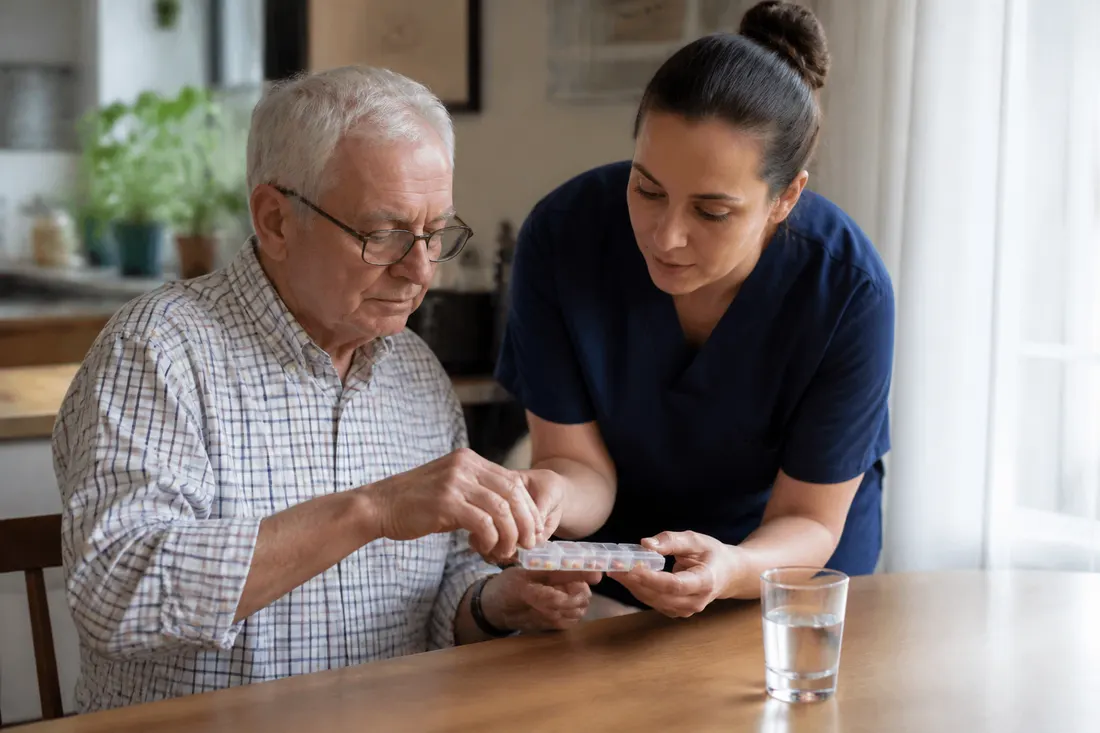
Women made up 60 percent and men 40 percent of the informal carers in the Ministry's sample. Women reported an average of 33 hours of care a week, men 24. The research also found a difference in activities: women were more heavily represented in direct personal care, while men more often managed finances, logistics, and dealings with public authorities.[2] This does not mean that every man or woman fulfils a “typical” role. It shows how social expectations can divide unpaid work and its consequences.
Children and adolescents require particular attention. The European report notes that young carers often remain hidden in both statistics and support systems. They may help with housework, siblings, interpreting, supervision, or personal care. Age-appropriate help can be part of a close relationship. The problem arises when a child assumes an adult's responsibility, has no room for school and peers, or is afraid to describe the situation to anyone.[4]
It is equally important not to assume that care is always safe and wanted. In some relationships, violence, neglect, or long-standing conflict existed before the illness. A patient may refuse help from a particular person. A carer may face shouting or physical danger because of symptoms, but also because of behaviour unrelated to the diagnosis. Explaining a cause must not erase boundaries and safety.
Nor does care have to be only a loss. It can bring closeness, meaning, new skills, and the opportunity to honour a person's wish to remain at home. An honest account must hold both truths at once: a relationship can be a source of strength and, at the same time, work that cannot be sustained indefinitely by love alone.
8. Help Exists. But It Must Arrive Before Collapse.
A family usually does not need one “large service,” but several precisely timed forms of support. A health professional teaches a procedure safely. A social worker helps map entitlements and local services. Home-care support or personal assistance takes over part of an ordinary day. Home nursing delivers indicated professional procedures. A day centre or respite service creates time in which the carer can work, sleep, or see their own doctor.
The Czech Ministry summarises these options on a dedicated portal for informal carers and publishes a map of regional support.[1] This is an important step, but information alone does not create capacity. A family may know that a service exists yet still be unable to access it within travelling distance, at a suitable time, or at an affordable price. Some families decline help because of privacy concerns or a bad experience; others encounter waiting lists or do not know which part of the system addresses their problem.
A sound home-care plan should therefore not rest on one carer alone. It should identify a primary coordinator, but also a substitute. It should distinguish tasks that require a professional from those that can safely be shared. It should include a number to call if the patient's condition changes, a medication overview, transport, a night-time plan, and an alternative if the carer falls ill. The patient should be involved to the extent their condition permits and should decide who may receive sensitive information.
Support must be an offer, not a transfer of responsibility. The Czech care allowance is not a wage that automatically covers every hour provided by the family. Remote work is not available in every occupation. Short-term carer's benefits do not solve care that lasts for years. And no brochure can replace a service that does not exist in a region.
European recommendations therefore emphasise a combination of accessible formal services, respite, flexible work, information, training, social protection, and healthcare for carers.[4] The strength of this approach is that it treats the family neither as an unpaid institution nor as an obstacle to professionals. It recognises the family as a partner with limits and rights of its own.
9. There Is One Patient. The Care Plan Must Include More People.
Illness should not dissolve into the vague statement that “the whole family suffers.” The patient bears a physical experience, uncertainty, and loss of autonomy that no one else can live through on their behalf. Loved ones bear other, derivative consequences. Accuracy requires us not to confuse these roles, while also not overlooking their connections.
For healthcare professionals, this means establishing—with the patient's consent—who will take over care at home, what they can do, and what is already beyond their capacity. For the social care system, it means assessing not only formal entitlement but the availability of actual assistance. Employers need a predictable process for requests to adjust work. Families benefit from dividing tasks before exhaustion divides them instead, and from discussing money, privacy, and boundaries as well.
The plan must also anticipate the moment when intensive care ends. A patient's recovery does not restore a household to its pre-illness state in a single step. The carer may need to catch up on their own treatment, rebuild a working routine, recover lost income security, or renegotiate the division of household duties. At the same time, the patient may be learning to live with lasting effects and regain independence. Help that was essential during a crisis must then be scaled back with sensitivity, so that protection does not become unnecessary control.
The end of care takes a different form when someone moves into residential care or dies. Hours that become available are not automatically free time: they may be filled by administration, visits, grief, and the search for a new role after years in which another person's needs determined the day. Returning to work may not mean returning to the same position with the same qualifications. Support for carers should therefore not end with the last bedside task. Follow-up social, psychological, and employment assistance can help a family assemble ordinary life again.
Journalists have another rule to follow: do not turn a carer into either a saint or a victim without agency. Do not present one powerful story as the experience of all families. Do not confuse association with causation. Do not write that illness “destroyed a family” when the data show an increased risk or the experience of some respondents. And do not disclose a diagnosis or family conflict merely because someone appeared publicly in a campaign.
The most accurate thesis is less dramatic and more important: treating one person often depends on the work of others. If we measure that work only when it collapses, we build a system that saves on support and later pays for a crisis. If we recognise it early, we need not replace the family. We can enable it to remain a family.