

At enrolment, one decision brings together the child’s readiness, catchment rules, the after-school club, transport and the parents’ work schedule. Enrolment can be administratively in order and September operationally hard. A request to defer school entry can answer the child’s needs and also a fear of the conditions the child would enter. Free education does not cover the whole family day, and the nearest school need not be the most accessible once time, transport and lost work are counted in.
1. A January kitchen in which five interests miss one another
Picture a January kitchen. The head of the catchment school wants every child from the district to arrive at enrolment on time and with a complete application. The first-grade teacher is dealing with the conditions for a safe start and for learning. The mayor is defending the capacity of the building and the number of after-school club groups that the municipal budget can carry. One parent’s employer wants a shift that starts at six. The specialist from the counselling centre is watching readiness, fine motor skills and speech. The parents want the child to “make September” and, at the same time, want someone to provide care after lunch.
The meeting can look like a dispute about the child’s readiness, but the people in the room are bringing different operational questions. The head is dealing with the date and the catchment, the teacher with the first weeks of teaching, the mayor with canteen and after-school club capacity, the employer with an adult’s attendance, the counselling centre with a professional assessment, and the parents with the remaining hours of the day.
None of these views, by itself, produces a working school week. The impression from enrolment does not verify a place in the after-school club, a connecting service, a safe pavement, the price of lunch or holiday opening. A “good first grade” therefore means, for a family, a coincidence of teaching and services, not a single quality of the building.
When choosing, the quality of teaching has to be separated first from the feasibility of the whole day. The building, the canteen, the after-school club, the timetable and the employment contract describe different parts of the same week; the prestige of the school will not, by itself, resolve their mismatch.
A school is not a building. A building is not an after-school club. An after-school club is not the parents’ working hours. And the number enrolled is not the family bill.
— Jiný Kontext
What we know about deferred starts — and what we do not know from these data
We know: in the Czech data the share of deferred starts is high and differs among regions; in the transitional period the legal conditions attach to the specific enrolment year and the child’s date of birth.[2][9] It can be assumed: the availability of preparatory classes, support and local practice can influence families’ decisions.[10] We do not know: the statistics cited do not split deferred starts into cases caused by the child’s health or developmental need, a counselling recommendation, a family’s fear, or a lack of support at the school. Without that breakdown it cannot be claimed that a deferred start “measures the school as often as the child”.
2. The school day is made of five linked services
A child’s entry into school is only the first point of the daily routine. Whether the week works is decided by the join between teaching, lunch, the after-school club, transport and the work of the carers. Two municipalities with the same catchment school can therefore offer an entirely different practical day.
Five layers of one school day
- Legal entitlement: compulsory attendance, catchment, enrolment, deferred start and free basic education.
- Pedagogical regime: the pace of reading and writing, sitting, materials, support in the first weeks.
- Operational shell: after-school club, canteen, weekly clubs, head-teacher days and holidays.
- Mobility: distance, pavement, connection, car and the time left before work.
- Family bill: contracts, shifts, deposits, meal charges and who bears the gap when the school closes.
Legal entitlement decides an important part of the day, but it is not the only actor. A school can admit a child and still offer no afternoon group. A canteen can cook and still set the charge at the upper edge of the limit. A connection can exist and still arrive after the bell. A counselling centre can recommend a deferred start and still not settle who, in the following year, will cover the pre-school duty.
This is where the first error of most public comparisons arises. The headline announces a contest of schools by the number enrolled, but in fact it compares two networks with a different after-school club, a different connection and different parental working hours. Or, conversely, it measures only the capacity of the building and presents the result as a verdict on accessibility. An honest comparison must state not only the name of the school, but also the opening of the after-school club, the price of lunch, the timetable, the number of days without teaching and who picks the child up.
Separating the parts of the day helps to locate the cause of the problem. A missed morning may be a connection; a cut contract may be missing afternoon care; and a thought about a deferred start may, beside the child’s needs, also be a fear of the school’s conditions. The mere figure for entry does not describe these circumstances.
Illustrative scheme: The same enrolment can, under a different after-school club, connection and contract, produce a different school year.
3. What also decides is how the family handles a gap
Families usually look for the school with the best reputation and the shortest distance. That is reasonable, but incomplete. Equally important is what failure looks like, whether it is visible in time, how much it costs to repair and whether the day can be reversed. A missed poem at enrolment is a cheap error. A missing after-school club in September sometimes is not. A badly bought satchel can be exchanged. A cut contract comes back more slowly.
Risk does not grow only because the school “is not good”. It also grows when formal fulfilment of the duty tempts the impression that the rest of the day is settled. The Charter and the Education Act guarantee free basic education; they do not say that the time between the end of lessons and the end of the shift is free as well.[1][11]
| Type of failure | What it looks like | How to test | What limits the harm |
|---|---|---|---|
| Failure of time | The after-school club ends before the shift ends | Compare the school’s opening with the real working hours of both carers | Replacement care, a moved shift, a shared pick-up plan |
| Failure of the route | The connection does not join, a pavement is missing, the car is the only choice | Walk the whole route at bell time, not on Saturday morning | A safe path, a second connection, an agreement with neighbours |
| Failure of capacity | There is a place in the class, there is no place in the after-school club | Ask about groups, the waiting list and September opening, not January | Enrolment in the after-school club alongside the school, a plan B |
| Failure of the bill | September is spent on one-off kit, October on lunches and clubs | Build a monthly list, not only a shopping list | Instalments, a benefit, a reduced fee, material help from the school |
The choice of school therefore also depends on the resilience of the family regime. A shorter after-school club can be covered by a grandparent around the corner, but for a household without replacement care the same gap is a serious problem. A slower start in reading can be handled in teaching; a parent’s shift at six in the morning cannot be moved by the same pedagogical measure.
When comparing, teaching has to be watched together with whether the family sees a gap in time, can replace it and how it hits the working contract. A school with an after-school club until seventeen, a connecting service and a lunch price known in advance may suit a particular household better than a celebrated address without these supports.
4. Enrolment counts children, not the whole family day
Enrolment is needed because it replaces part of the impressions with an administrative act. The problem arises at the moment when one number of children enrolled starts to stand for the whole accessibility of the school. The ministry of education publishes enrolment statistics for first years: numbers of applicants, of children enrolled and of requests to defer, broken down by type of class, age and further marks. At the same time, an applicant is not the same as a unique child, and enrolment is not the same as a September start.[4]
Every figure contains hidden decisions. Who is counted twice because they applied to more than one school? Who arrives after last year’s deferred start? Which number is from January and which is from the opening return as of 30 September? An answer to any of these questions can change the ranking of municipalities and the impression that “there are more children this year”.
As of 30 September 2024 the ministry, according to figures given to ČTK, recorded 119 932 newly admitted children in year 1 of basic schools. Of these, about 91 300 were six-year-olds, about 27 500 seven-year-olds and 800 five-year-olds. The share of children who started after an assumed deferred start was given by the ministry, on the same date, as 23.2 percent. This is the opening state of one school year, not the number of applications at enrolment and not proof that every seven-year-old child “needed” the deferral. It does show, however, that almost a quarter of newly admitted first-graders in this return are not six years old.[6]
What to find out besides the number enrolled
- Period: enrolment, or the opening of the school year.
- Unit: applicant, enrolled, newly admitted, or unique child.
- Age and reason: six years, seven years after a deferred start, five years on an early start.
- Territory: the state, a region, a catchment, or one building.
- What the number does not measure: the after-school club, the connection, the contract and the price of the day.
The national total helps to plan the network, but it does not verify a household’s journey or afternoon care. Those appear only in local opening, with a real bell, a real connection and a real after-school club. A family decision must therefore rest on a concrete week, not only on the number enrolled.
5. Compare services, not buildings
The network of basic schools can be described without a false podium of winners. The map that follows does not say which address is first in general. It shows around what work the individual layers build “starting school”, what kind of day they bring and which failure the family should look for, on purpose, during the test. Capacities change; what decides is therefore always current information from the school, the founder and the timetable of a particular September.
| Layer | Main working position | What to check before enrolment | Typical reason for the choice |
|---|---|---|---|
| Catchment school | Legal entitlement and the shortest formal distance | Whether catchment also guarantees an after-school club and lunch, not only a class | Certainty of a place in the class |
| School outside the catchment | Reputation, language, a sibling, a specialisation | Admission, transport and what happens if the child is refused | A different pedagogical regime |
| After-school club and school club | Afternoon care tied to the minimum wage | Opening, waiting list, fee and days without teaching | Keeping the contract |
| School meals | A food-purchase allowance, not a “free lunch” | The fee inside the decree limit and the payment regime | Certainty of food at school |
| Connection and pavement | Physical access at bell time | The whole route on a working day, not on a map | The child moving independently |
The table does not judge the quality of teachers. It captures an operation that can change between September and June together with a connection or a fee. Its point is to expose a situation in which a good class does not solve the end of the day and the family stays dependent on a single car.
How to read the scheme: The position of the school does not express a ranking of quality. It joins questions of teaching, care, transport and work that have to be checked together.
6. A deferred start can reflect the child and also the setting of the system
A deferred start of compulsory school attendance is often read, in Czech, as a sentence about the child. It is not that automatically. In a thematic paper on deferred starts the Czech School Inspectorate states that the share of children with a postponed start in Czechia has long exceeded the average of other European countries, reaches values over 20 percent and in recent years has approached 25 percent. In the school year 2023/2024 it gave a national share of 23.6 percent, 27.6 percent in the Olomouc Region and 21.1 percent in the Vysočina Region. This is the share of children with a deferred start in the given school year according to inspection and return data, not the share of clinical diagnoses and not an internationally unified definition of “unreadiness”.[9]
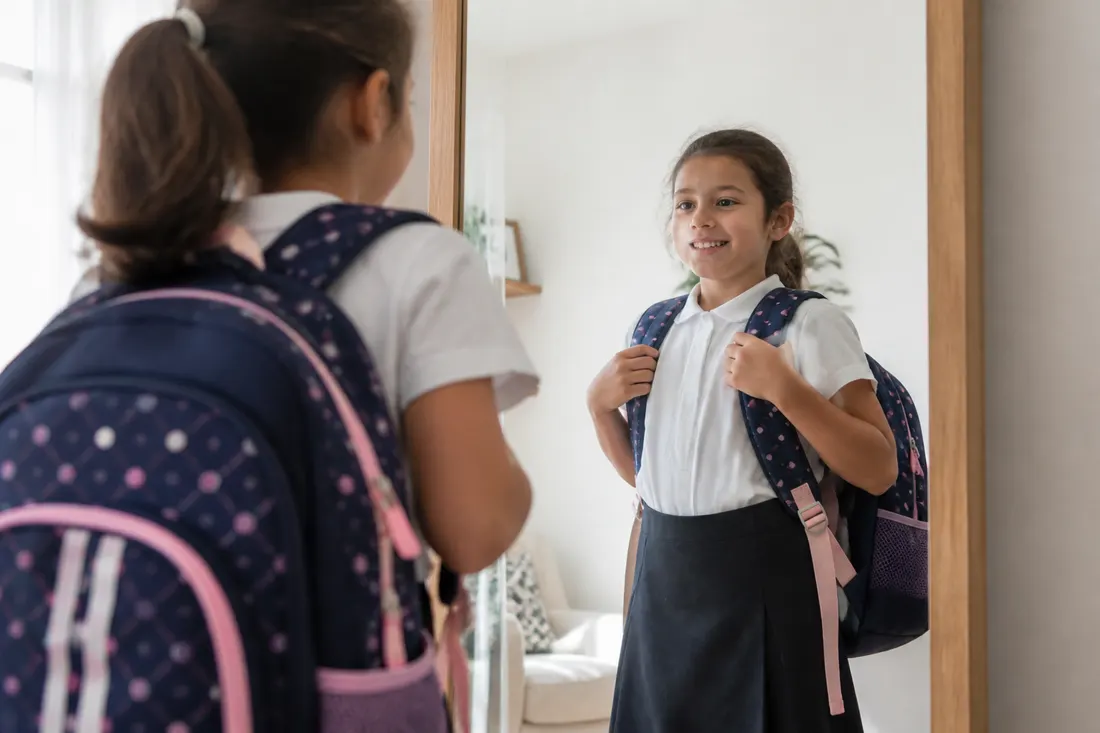
That matters more than the simple impression that “Czech children mature later”. A fourfold difference against a country where deferred starts move in single-digit percents cannot, without further data, be read as a fourfold occurrence of disorders. In the same paper the inspectorate itself compares Czechia among others with Germany, where the share of deferred starts has long moved around 5 to 7 percent, in some federal states only 1 to 2 percent, and notes that the rules differ among the Länder. The comparison is therefore useful as a signal of how the system is set. It is not proof that a German child is more ready by the same number of percentage points.[9]
A deferred start in Czech law is not a free parental preference. The Education Act ties it to an application at the time of enrolment and to prescribed recommending assessments. The amendment applies transitionally by the child’s date of birth; for enrolments held in January and February 2026 the ministry therefore issued a separate methodology. The change under which the school need not itself inform about the possibility of a deferred start at enrolment applies, according to this methodology, to all children. For a concrete application the rules valid for the given enrolment year and age group must be used.[1][2]
A family is therefore not choosing only “one more year of childhood”. It is choosing a different regime of the pre-school duty, a different place in kindergarten or a preparatory class, and a different position of the child in the next group. That can be the right choice. Beside the child’s needs, fears about adaptation, the availability of support or the organisation of first grade can enter the decision. The national statistics cited, however, do not say how often which reason decided.
7. An international figure is useful only when it measures the same thing
A comparison of deferred starts among states is needed because it replaces part of the domestic folklore. The problem arises at the moment when one percent starts to be read as a ranking of readiness. Eurydice describes the national arrangement of the school year and pre-school education; it does not say that a “deferred start” means the same thing in Prague as in Bavaria.[21]
Every comparison contains hidden decisions. Who decides — the head, a doctor, or a parent? Can a deferred start be repeated? Where does the child go after it — to kindergarten, or to a preparatory class? Is the share counted from the birth cohort, from applicants, or from six-year-olds in kindergarten? The answer changes the ranking.
The inspection report on the transition from kindergarten to basic school adds a domestic geography: it gives, for example, the highest share of children with a deferred start in kindergartens for the Jeseník district in the Olomouc Region and links it, among other things, to a low presence of preparatory classes. This is a finding of a particular ČŠI inquiry, not proof that the Olomouc Region “cannot teach”. It shows that a deferred start is also a question of the offer of a place where the child is to go for a year.[10]
A European average can open a question, but for one family the local map decides. What matters is whether the municipality offers a preparatory class, how many six-year-olds remain in kindergarten and what the waiting time is at the counselling centre. The choice will in the end take place under the conditions of a particular September.
8. Free provision covers the textbook. It does not cover the day
Article 33 of the Charter of Fundamental Rights and Freedoms guarantees citizens the right to free education in basic and secondary schools. The Education Act carries this free provision into effect, among other things, for textbooks and for basic school supplies.[11][1] That is a substantial property of a public service. It is not a description of the whole family bill.
The decree on basic education provides that pupils in first years and children in preparatory classes are given basic school supplies free of charge to the value of 500 CZK per pupil for one school year. The school buys the materials. A parent has no automatic claim to reimbursement of a receipt. Five hundred crowns is an allowance for basic supplies, not a ceiling of the shopping list the school may hand out, and not the price of a satchel, indoor shoes and gym kit.[12]
School meals are a further layer. The decree on school meals provides that the fee equals the financial allowance for the purchase of food and that this allowance is set inside a range of limits by age group. For diners aged 7–10 the lunch limit is 20.00 to 47.00 CZK a day. This is a limit on the purchase of food, not the full price of serving including kitchen wages, and not an average that a household would necessarily pay. The concrete amount is set by the facility inside the range according to local prices.[13]
The after-school club is a third layer. The decree on leisure education leaves the setting of the fee to the founder and at the same time says that the monthly amount per participant must not exceed 4 percent of the basic rate of the minimum wage valid at the time of setting. The ministry states of after-school clubs that in the school year 2023/2024 there were 4 207 after-school clubs in Czechia with 14 725 groups and 361 566 participants in regular daily attendance. This is the capacity of the network, not a guarantee of a place for every first-grader until seventeen.[14][15]
For a low-income household there is a reactive net: extraordinary immediate assistance under the Act on Assistance in Material Need, and exemption from the after-school club fee for selected benefits. That is a safeguard after a shock. It is not a design of the day that would precede September.[16][17]
What needs to be tested
The first test concerns what is truly free. Textbooks and 500 CZK of supplies are not the same as a list of “what to buy for first grade”. The second concerns repeated payments: the meal charge inside the decree limit, the after-school club fee up to a ceiling of four percent of the minimum wage, funds and weekly clubs outside this ceiling. The third concerns time. An item that is not in the school budget can be the largest in the family budget: a cut contract.
For the school the sentence “the pupil has been admitted” is enough. For the household it is not. The household needs to know the opening, the charges, the connections and the line beyond which the day no longer works.
9. Time is not a side cost. It is the main bill
The visible payment for lunch is only part of the bill. The second part is the time that someone has to supply so that the child and the adult are in two places in the same hour.
The 2021 census gives a mobility map for this, not a map of first-graders. According to the CZSO, more than 3.6 million persons, that is 70 percent of persons with a known place of work, commuted to work outside the address of usual residence. A car as the main means of transport for the journey to work was used by 60.2 percent of persons with a known means; 54.8 percent of commuters with a known means stated themselves as drivers. These are employed persons in the census year, not parents of first-graders in 2025, and not proof that a car is a convenience. They show that Czech work is, in most cases, tied to commuting and that the car plays the main role in it.[18][19][20]
On the journey to school the picture is different. Among commuting pupils and students with a known means, 26.6 percent walked, 23.1 percent went by bus, 20.6 percent by urban public transport and 18.9 percent by car. The census places here all pupils and students, not only first-graders. A first-grader, moreover, often cannot travel alone. Where an adult is sitting in a car to work anyway, the escort becomes a knot of two timetables.[19][20]
The school does not thereby take on a duty to run public transport. The accessibility of education is not, however, exhausted by opening the door at eight; the family needs a lawful, safe and time-compatible journey there and back.
Three tests of the morning route
The first is a time test: when the child must leave in order to catch the bell, and when the adult still catches the shift. The second is a safety test: is it a pavement, a crossing and lighting, or a road shoulder. The third is a substitute test: what happens when the connection does not run, the child is ill, or it is a head-teacher day. A route that works once on a Saturday need not work five times a week in the rain.
Here too paper distance and real distance differ. A kilometre on a pavement is not the same as a kilometre along a road. Catchment by permanent residence is not the same as an arrival at seven in the morning.
10. An after-school club is not a weekly club. It is work infrastructure
In talk, the school after-school club is classed with weekly clubs. In law it is leisure education with a fee ceiling and with a capacity of groups. The ministry states a range of 20 to 30 participants in a group and the rule of four percent of the minimum wage. The founder sets the amount by 30 June for the following school year.[14][15]
That matters more than the dispute whether 400 CZK is “a lot”. The family is not buying a programme. It is buying the overlap between the end of lessons and the end of work. A weekly club once a week does not make this overlap. An after-school club that ends at 15:30 does not either, if the shift ends at 17:00.
The summer holidays, head-teacher days and days off do not switch the school off as a right. They switch it off as a service. The first school year is therefore not ten months of certainty. It is an alternation of weeks in which the public service covers the child and weeks in which someone else must cover the child. The public sum of these days for a particular school is not kept in the ministry yearbook as an item “family burden”. A missing total is not proof that the burden is small. It is a reason to build a calendar before enrolment, not after the first head-teacher day.
An illustration, not a report. A family that lives 600 metres from a school with a pavement and an after-school club until 17:00 can, after assessing the child’s age and maturity, the route and local conditions, handle the escort more simply. A family whose catchment small school has closed and whose school lies nine kilometres beyond a road without a pavement is dealing with a different day: a morning connection that does not join, an afternoon connection an hour after the bell, and an after-school club that ends before work. Both children can be “newly admitted pupils of year 1” in the return as of 30 September. The price of that line is different.
11. The yearbook does not know a particular family’s Tuesday
Before the opening returns are published, the public checks an impression. With the return it checks something more complicated: whether the number speaks to the same question. The number of newly admitted is a navigation toward capacity. It is not automatic proof that the family’s day works.
A free place in a class, the national number of after-school club participants and the statutory price limit for lunch are true figures about different parts of the system. The conclusion “the school is accessible” does not follow from them, however, if the local after-school club does not admit the child or no connection runs after it ends.
A four-step check of a school figure
- Existence: the figure is in a primary return, a statute or a decree.
- Unit: enrolment, opening, a region, or one building.
- Support: the particular passage really supports the particular sentence.
- Scope: the population, the period and what the number expressly does not measure all fit.
The most reliable working procedure therefore separates the capacity of the network from the capacity of the day. First a table is made: class, after-school club, lunch, connection, shift, holidays. Only then the decision about the school and about a deferred start. If a figure cannot be opened or the passage does not measure the given municipality, a claim is not raised to a fact merely because it stands in a national average.
A return is good when it shortens the path to a check, not when it replaces the check. For the low-risk question “how many first-graders are there in the state”, the ministry number is enough. For the question “can we manage Tuesday at 15:40”, the last step must be taken by a person who knows the connection and bears the cost of a missed shift.
12. The price of a satchel is the price of a raw material, not the price of a year
The market and the school use several price languages at once. The state pays an allowance of 500 CZK for basic supplies. The founder sets the after-school club fee up to a ceiling. The school canteen sets a food allowance in the range 20 to 47 CZK for lunch for children aged 7–10. The family pays the rest of the list, transport and time. A direct comparison “school is free” without knowledge of the day therefore misleads.[12][13][14]
A cheap after-school club fee can be economically excellent if the group really lasts until the end of the shift. The same fee can be expensive if it ends at 15:30 and forces a cut in the contract. An expensive satchel can be unnecessary. It can, however, be cheaper than a year of commuting without a pavement, if the alternative would otherwise require two car journeys every day.
The real price of an accepted school year
State allowance + meal charge + after-school club + transport + human pick-up + a missed shift + holiday care.
A year is cheap only when both the child and the adult get through the day and the day can be repeated on a Tuesday.
The costs also include fluctuation. If the after-school club falls away once a week, the average price of the day is not the price of school fees. If the connection does not run at the peak, the cost is waiting and a late arrival. If the whole regime is tied to one car and one grandparent, the cost is also the illness of that link.
That is why it is useful to measure the price on an accepted day, not the price on a satchel. Accepted means that the child was at school, someone took the child after lessons and no one had to leave a shift in an emergency. This metric can reverse a ranking that looked unambiguous from a list of materials.
13. What to check before enrolment
The reputation of the school is only the second step; first a normal day and a way of checking it have to be assembled. The table that follows does not rank addresses, but helps to compare the catchment school and one alternative at the same bell time and the same family budget.
| Need | First place of the check | Decisive test | Unacceptable shortcut |
|---|---|---|---|
| A place in the class | Catchment and the enrolment window 15. 1.–15. 2. | Whether the application is complete and filed in the statutory window | Rely on the impression from a poem |
| Afternoon care | After-school club, school club, grandparent, neighbour | September opening versus the end of the shift | Swap a weekly club for daily care |
| Food | The school canteen and the decree limit | The concrete fee, not the national band | Read 20–47 CZK as a price that “everyone pays” |
| Route | Pavement, connection, car | The whole journey on a working day | Measure only kilometres on a map |
| Deferred start | The counselling centre and the wording of § 37 for the given child | Whether it addresses the child, or a gap at the school | Take the regional average of 23.6 % as advice for one child |
| Bill | Monthly payments and holidays | An accepted day including lost work | Add only the August shopping |
| Low income | Fee, exemption, extraordinary immediate assistance | Entitlement and the application deadline before September | Wait for a debt for lunches |
Czech national and regional figures have to be supplemented by a check of the particular municipality. The share of seven-year-olds in the return will not show the pavement in the street, the regional share of deferred starts will not describe the support of a particular school, and the number of commuters will not decide whether a given work shift still catches the connection.[6][9][18]
A family plan can rest on several supports: the school, an after-school club in a neighbouring municipality, help from grandparents and an adjusted contract. Such a split is not, by itself, a failure of catchment, but it must be intelligible and able to survive the failure of one link.
14. A September that will say more than a statistic
A short audit can, before a decision, expose weak points without a move or a hasty deferred start. It does not judge the impressiveness of enrolment; it simulates days on which a connection, the after-school club or the availability of a carer fails.
Fourteen days from impression to decision
- Days 1–2: Write down the real week: the bell, shifts, connections, who picks up.
- Days 3–4: Get from the school the after-school club opening, the price of lunch, the list of supplies and the days off.
- Days 5–7: Walk the route three times at bell time and record the friction: delay, a road shoulder, a change.
- Days 8–10: Check a place in the after-school club, the waiting list, the fee and the rule in case of illness.
- Days 11–12: Count the price of an accepted day including transport and a possible missed shift.
- Day 13: Run stress tests: a head-teacher day, a missed connection, a child without an after-school club, a sibling.
- Day 14: Decide by the matrix, document the gaps and set a date for the next review in October.
The assessor should, if possible, not decide by one visit to enrolment. On the route they watch time and safety. On the after-school club, the real end of opening. On the bill, monthly items, not August items. On a deferred start, whether the report describes the child or a fear of the school. Every failure is classified: time, route, capacity, bill or the absence of a substitute.
A comparison of operation requires the same week, the same shifts and the same number of attempts at a connection. A different length of after-school club is a legitimate part of comparing the whole day. When judging teaching itself, the operational conditions have, conversely, to be separated.
The audit should also have exclusion conditions. For example: no afternoon place, a route without a pavement on a dark morning, a lunch outside the published limit, or an inability to assemble a week without losing a shift. A high reputation of the school should not override a gap whose impact the household cannot accept.
The audit should end with a concrete operating rule: who drives and picks up, how the family handles illness, when payments arrive and when the plan is checked again. Connections, fees and capacities change, so the decision must have a revision date.
15. Demography changes capacity. It does not change Tuesday at 15:40
In 2025, 77.6 thousand children were born alive in Czechia, the fewest in the history of statistical recording since 1785, and total fertility fell to 1.28 children per woman. Against 2021, when 111.8 thousand children were born, this was a fall of 31 percent. These are births in a calendar year, not first-graders of the same year; the break will write itself into first grades with a lag. The effect on capacities can differ regionally by migration, the size of municipalities and the arrangement of the school network.[7][8]
A demographic fall will not, by itself, solve the school day in a peripheral municipality. Relief in class capacity need not change the connection or the present state of the pavement. A projection helps to plan the network, not to decide one household’s Tuesday.
16. The legal window of enrolment is not a test of readiness
The statutory enrolment window is from 15 January to 15 February of the year in which the child is to start attendance; the place and the day inside this window are set by the head. The motivational part with the child is voluntary, the conversation at most 20 minutes, further activities at most 60 minutes, and it is not a diagnostic test. Diagnosis belongs to a specialist workplace. Failure to fulfil the duty to register the child can be punished as an offence.[2][3][22]
Anyone who confuses these layers buys the impression from a poem and receives an administrative decision about something else. For enrolments in 2026 the date has returned to the period 15 January to 15 February. An earlier decision does not, by itself, settle the after-school club or the September timetable; it does, however, give the family and the school more time to prepare.[2][22]
Before a decision on a deferred start
The first test is whether the assessment describes this child, or the average of the region. The second, where the child will go for a year and whether there is a place. The third, whether the deferred start addresses unreadiness, or missing support in September. The fourth, whether it merely postpones the same clash with the connection and the after-school club by twelve months. A deferred start is a tool. It is not an automatic remedy of the network.
17. The greatest vulnerability can be a single connection
The first generation of school statistics counted pupils. The next generation counted classes, teachers and lunches. Today’s family is buying something larger: a place in which the child spends the morning, eats, sometimes the afternoon as well, and around which the work of adults turns.
That is why municipalities and schools do not compete only for the reputation of teaching. They compete — often unintentionally — for the working context of parents. For the after-school club, the connection, the canteen, the calendar of days off and the habits of pick-up. The more comfortable the shell that arises, the higher the price can be when a connection is cancelled, a group closes or the family moves three kilometres next door.
Joining the school and the care that follows can bring a family a large benefit if it is chosen consciously. It needs documented opening, a portable plan B, a possibility of change and an emergency procedure for the day when the usual help fails.
A good first grade is not, for a particular family, recognised by the number enrolled or by the length of a list of weekly clubs. Its teaching and its opening must match the real week, and any gaps should be visible, reversible and economically and humanly bearable.
At the moment when the child is only reciting at enrolment, we are choosing a pedagogical ritual. At the moment when the school decides who can work full time, who must sit in a car and who applies for a deferred start, we are also choosing the structure of the day. And then the question is no longer: “Is the child ready for school?”
Before enrolment, therefore, a question remains: Which part of the day will the school actually cover, who will carry the rest of the time — and can the family afford that gap?
— Jiný Kontext