
Imagine a photo taken at night. The picture shows a familiar person handing an envelope to another man. A black car stands in the background. Time, place and faces are legible. The photo spreads across the Internet in minutes.
The first reaction is predictable: Is it real?
A few minutes later comes the reply of the person captured in the picture: "It's an AI."
And that changes the problem.
Until recently, the main risk of visual manipulation was that someone would create a false image and the public would believe it. Generative systems add a second possibility: someone presents an image that is real — and the person harmed rejects it as synthetic.
It is this latter effect that lawyers Bobby Chesney and Danielle Citron have described as liar's dividend — "liar's dividend." The more believable the technology is capable of producing forgeries, the more believable the claim that an unpleasant authentic record is a forgery can be.1
The title of this article is therefore deliberately exaggerated. Of course, a photo can prove something. But the image itself functions less and less as proof of its own origin. Increasingly, what we see in pixels will only be the beginning of validation.
Photography has never been pure truth
We've always overrated photography a bit. The lens selects a slice of reality. The photographer stands in a certain place. The shot captures one-tenth of a second, leaving out everything before and after it. Focal length changes relationships in space. Exposure changes what is seen. The caption under the photo changes the interpretation.
So the image was never identical to the event.
Still, it had one huge psychological advantage: the creation of photography had long been firmly connected to the physical world. There had to be light somewhere. Some lens. Some moment that left a mark on film or sensor.
Digital editing weakened this link, but we mostly continued to think in terms of "original image" and "edited image".
The generative model breaks down this intuition more thoroughly. He can create an image for which no corresponding moment in front of the lens may have ever existed.
A central problem is not only that AI can fool us
The debate about deepfakes is often reduced to a contest between the generator and the detector. One system produces fake images, the other looks for them. The generator improves, the detector is retrained, and the cycle begins again.
But the social problem is wider.
NIST does not break down a single magic defense in its report on synthetic content risks. It describes several technical families at the same time: origin and authentication of content, marking or watermarking, detection of synthetic content, testing of these tools and other mechanisms of digital transparency.2
This is important. If it was enough to open any photo in a universal "AI detector" and get a certain yes/no answer, the whole problem would be incomparably simpler.
NIST has separate forensics programs focused on evaluating systems for detecting AI-generated manipulations and runs the research challenge precisely because the reliability of analytical systems must be measured against real and changing types of manipulations.3
Practical principle: the detector result is not the same as the provenance. The detector estimates based on the characters in the content. Provenance asks where the file came from, who created it, how it was changed, and whether the string can be cryptographically verified.
Liar's Dividend
Now back to the cover photo.
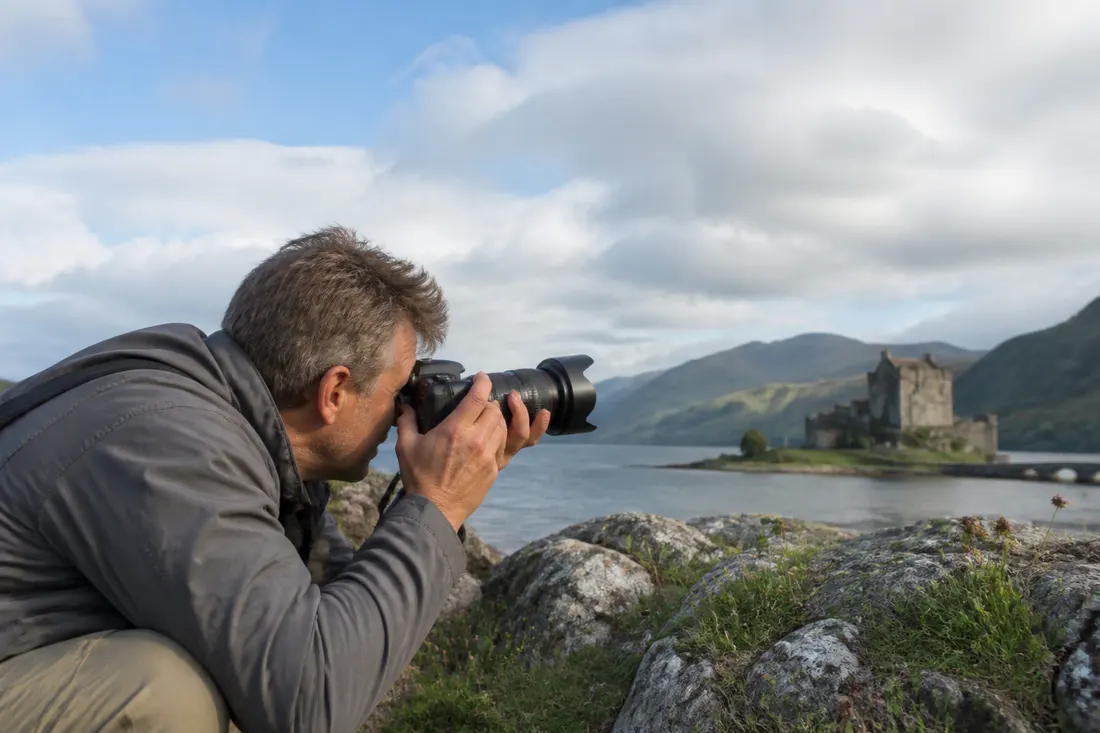
If false, generative AI made it possible to manufacture libel.
If it is genuine and the captured human marks it as an AI, the generative AI has given it a new type of defense.
Chesney and Citron already described this second situation in 2019. The more the public knows that the image and sound can be convincingly faked, the easier it can be to cast doubt on the real recording as well.1
What is more interesting is that since then it is no longer just a theory.
Researchers Kaylyn Jackson Schiff, Daniel Schiff and Natália Bueno conducted five experimental studies on more than fifteen thousand adults in the US. They tested situations where a politician reacts to a real scandal by claiming that it is disinformation or a deepfake.4
But the result is worth a careful reading, as it is less cinematic than is often claimed.
The authors found the "liar's dividend" mainly in the scandals presented by the text. For video, attempts to dismiss the evidence as a deepfake were significantly less effective overall; in most of their video conditions, the clear effect was not confirmed.4
Technology creates the possibility of plausible deniability. But that doesn't mean people will automatically believe anyone who shouts "deepfake".
This is an essential brake against excessive catastrophism. "Liar's Dividend" isn't a magic formula that instantly destroys every video. Empirical data show that the effect depends on the form of the evidence, the context, and the way in which the denial is formulated.
But the very existence of this strategy is changing the information environment. Next to the question "can false proof be created?" we have to follow the question as well "can the real one be conclusively disputed?"
Why a detector is not enough
Imagine software that says "AI probability: 87%" next to a photo.
What exactly did you learn?
Maybe a lot. Maybe less than the number suggests.
Such output depends on what generators and manipulation types the system was tested on, what happened to the file after creation, whether it was compressed, rephotographed, cropped or re-uploaded via a social network, and how well the detector generalizes to generators that did not exist when it was developed.
Therefore, forensic detection is useful but epistemically distinct from chain of descent. The detector looks at the result and looks for clues. Provenance tries to document history.
The future may not "know fake". It will "prove provenance".
This is precisely why standards focused on the provenance of digital content are being created. The Coalition for Content Provenance and Authenticity — C2PA — is developing an open technical standard for Content Credentials.
In the current specification 2.4, the principle is described as a cryptographically verifiable system of information about the origin of content: who or what made a certain claim about a file, what modifications were recorded, and whether this data was changed after signing.5
This is an important shift in logic.
Instead of an endless question "can we find a trace of AI in those pixels?" we can ask:
Where did the file originate? What was done to him? What system signed this information? Does the cryptographic binding still fit this particular content?
And it is here that it is necessary to prevent a new illusion.
Provenance is not true.
C2PA itself explicitly states that the specification is not intended to make value judgments about whether provenance data is "good" or "bad". It verifies the binding of assertions to the file, their correct form and integrity; it doesn't say whether the scene in front of the camera wasn't staged or whether the photo caption is lying.5
The camera can cryptographically confirm: this file was created on this device and has not been modified as such since signing.
It cannot confirm by itself: what you see means exactly what the caption tells you.
So what will the photo prove?
Maybe less on its own. And more as part of the evidence system.
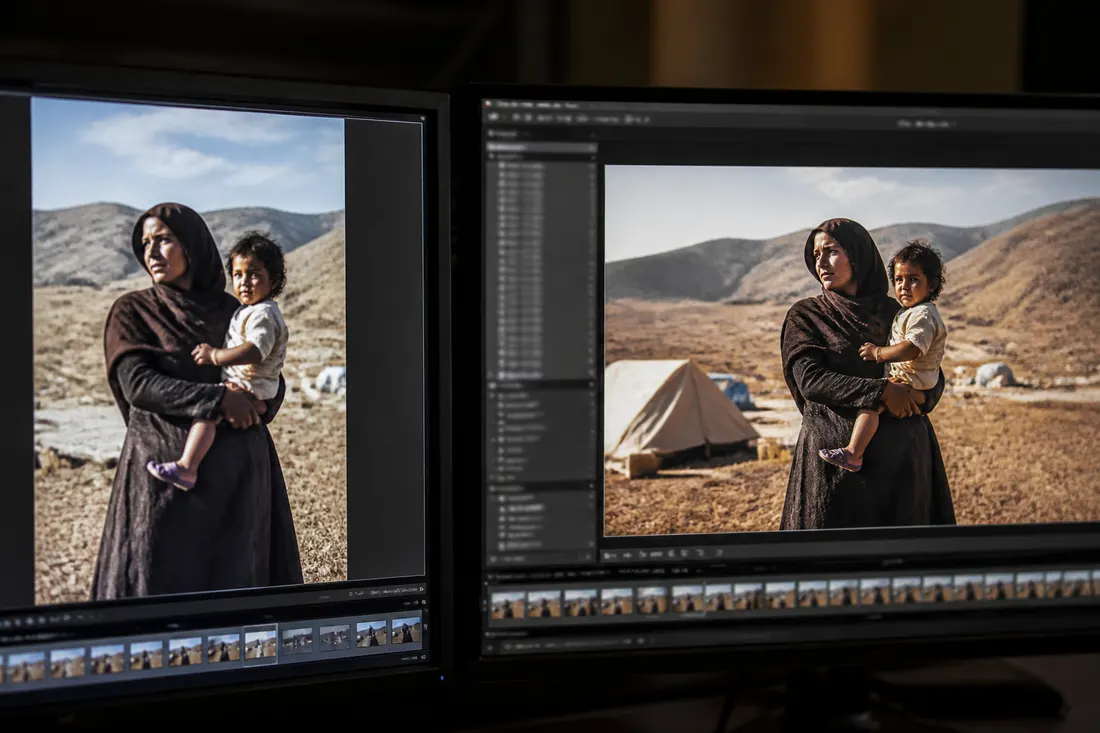
After all, the forensic world has known this principle for a long time. Evidence is not strong just because it "looks right". The value of digital material increases with documented provenance, integrity, original file, timeline, other devices, witnesses, logs and independent traces.
Generative AI only moves this way of thinking out of forensics labs and into everyday life.
Someone send you a screenshot of the conversation? Not only what's on it, but where does it come from?
Will the video appear? Not only whether it looks realistic, but whether there is an original file, recording continuity and other footage.
Someone claims photography is AI? The same standard of skepticism must apply to this claim. "It's a deepfake" is no more proof than "I saw it on the internet".
Paradox of more perfect forgery
The more perfect synthetic images become, the less useful one of the oldest human heuristics becomes: "I would recognize this".
But a truly dangerous world is not one in which everyone believes everything.
It creates an environment in which different people can choose what they are willing to believe.
Photos to prove my point? Real.
A photo that bothers me? AI.
Video of my opponent? Evidence.
Video of my man? Manipulation.
In such an environment, the technical ability to verify the medium ceases to be only a matter of cyber security. It becomes part of the social infrastructure of trust.
At the same time, research on the "liar's dividend" reminds us of something important: this dystopian scenario is not a fait accompli. People still give considerable weight to audiovisual evidence, and simply claiming "deepfake" in experimental studies did not automatically erase the effect of the video.4
So perhaps we are in a transitional period. The old rule of thumb "seeing is believing" is no longer enough. The new rule has not yet been fully adopted by society.
A new rule of evidence
The future of visual authentication is not likely to rest on a single technology.
It won't be the only AI detector.
It won't be the only watermark.
It will not be the only cryptographic standard.
It will be a combination of: provenance, forensics, chain of custody, independent sources and human judgement. NIST also describes exactly such a multi-layered approach in its report on the transparency of synthetic content.2
And maybe AI will bring us back to a much older principle of proof:
It's a less comfortable world.
A screenshot will not be the end of the discussion. It will be its beginning.
A photo will not automatically be a verdict. There will be one track.
And the most important question may not be:
"Is that painting real?"
But:
"What exactly do we know about the way he got to us?"
Because generative AI didn't just bring the ability to manufacture a reality that never existed.
It also brought something more subtle: the ability of doubt to survive even where reality existed.
And in such a world, the photograph itself no longer has to prove almost anything.
Her history can prove much more.