

Section: Justice & law Author: V Reading time: ~27 min Sources and further reading: 22 items Topics: AI, law, the bar, accounting, audit, court translation, regulation SEO / working title: Can AI replace lawyers, accountants or translators?
Can AI replace lawyers, accountants or translators? The question sounds simple only until we notice that we are joining three different stamps. Passing the American bar exam is not admission to the Czech Bar Association. Accounting software is not an auditor’s opinion. A BLEU score is not an interpreting act before a public authority. And a high-risk system for justice is not a ban on research inside a law office. This article therefore does not ask which of these professions will fall first. It asks which act the law ties to a person who holds an authorisation, and which draft a model may speed up without bearing a signature.
1. The stamp on a judgment translation is not BLEU on a test set
On the same day, three offices play out a scene that looks the same. A trainee lawyer pastes a draft contract into a tool and wants a faster first version. An accountant lets the system sort the documents and asks whether the month can already be closed. A translation agency brings a machine translation of a judgment with a good score and cannot see why the court will not take it as an act. Beside them a colleague holds up an article about GPT-4 passing the Uniform Bar Exam, and another mentions a study that places legal services among the industries with high exposure to language models [13][16].
At first glance this is one dispute: cognitive professions against the model. In fact each person is describing a different act. The trainee is dealing with text. The accountant with line items. The agency with how close a translation is to a reference. The bar exam with a scored test. Felten, Raj and Seamans with the overlap between the capabilities of language modelers and the descriptions of American industries [16].
They can therefore all be partly right and the shared conclusion still wrong. A model can be useful at the drafting stage. It may do research better than a junior without practice. It can translate an e-mail so that everyone understands it. From that it does not follow that it has acquired the authorisation to provide legal services, to perform a statutory audit, or to carry out a court translation act.
Three licences, three prices of error. A benchmark is not a signature.
— Jiný Kontext
2. A text task sits in a different regime from a legal effect
One model answer has at least six layers. The first is a text task: a summary, a draft from a template, a typo check, a working translation of an e-mail, recognition of a document type. Exposure can be high here. The study by Eloundou and co-authors measures the technical exposure of tasks to language models and to tools built on top of them. The study by Felten, Raj and Seamans ranks legal services among American industries with high exposure to language modelers. Neither measures a Czech licence [16][17].
The second layer is legal effect. A filing for a client, an auditor’s opinion, or an act of a court translator are not just sentences. They are expressions of will and of responsibility in a regime that the law entrusts to a particular person. The third layer is the licence: enrolment, an examination, an oath, a chamber, or a ministry list. The fourth is confidentiality and the data regime. The fifth is review and the price of error. The sixth is the regulation of systems, if the tool enters the state’s judicial decision-making.
The sentence “the model can write it” is therefore not an answer to the sentence “it may perform it”. It can shorten a first draft. It can widen the variants. It can show a problem that a person would have noticed later. It is not the holder of the authorisation. And if a person without that authorisation offers the result as a reserved service, the problem does not arise because a model produced the text. It arises because a draft has become an act that the law entrusted to someone else.
That boundary is often lost in practice, because every layer looks the same on the screen. A draft contractual clause, a citation check, a reply to a client, and a finished filing are all text. In a CMS, in e-mail and in a PDF they look like lines. The law does not read them by the font. It reads them by the relationship, the purpose, and the person who issues them. An internal note can be working material. The same sentence in a letter to a client can be advice. The same sentence in a filing can be a procedural assertion. The model will not see the boundary between these regimes by itself unless a person puts that boundary into the process.
It is therefore not enough to adopt a rule that “AI may only help”. Help with what? With a first outline, with a check for duplicates, with a translation of an annex for orientation, or with the final conclusion? An organisation needs a map of acts. For every line it should be clear whether the output stays inside the office, whether it goes to the client, whether it enters the financial statements, whether it is attached to an official act, and who approves it before it is sent. Without such a map the model does not become dangerous because it writes. It becomes dangerous because nobody knows when the text stopped being only a draft.
3. The best tool is the one whose hallucination the review can bear, not a signature
For these professions it is not enough to ask how often the model answers correctly. Just as important is what its error looks like and who will see it. A failed sentence in an internal note is cheap. A fabricated citation in a filing is expensive. A wrongly assigned liability in the accounts can travel into a management decision. Mixing up the parties in the translation of a judgment is not a stylistic defect.
| Type of failure | What it looks like | How to test | What limits the harm |
|---|---|---|---|
| Hallucinated citation | A fluent paragraph, a file that does not exist, or a shifted holding | Check every decisive citation against the primary source | A person signs the filing; autonomous citation is not a working rule |
| Service without authorisation | Chat output is offered as legal advice, an audit, or a court translation | Separate the draft, the review, and the reserved act | The Advocacy Act, KAČR, and the ministry list [1][3][7] |
| Leak of a case file | Client material ends in an unsuitable account or regime | Establish the contractual regime, retention, anonymisation, and access | Confidentiality, practice texts, and a governed tool [1][22] |
| BLEU in place of effect | The translation looks close to a reference but does not satisfy the act | Human review of meaning, names, and legal consequences | A listed interpreter or translator for the act [6][14][15] |
| Accountant confused with auditor | An AI set of financial statements is read as an auditor’s opinion | Distinguish bookkeeping from the statutory audit | The entity’s responsibility and the auditor’s opinion [2][3] |
The best system is therefore not the one that speaks with the most certainty in a demo. It is the system whose failure has a place in the process. Who checks the source. Who decides on publication. Who bears the signature. And where the work stops if a decisive datum cannot be verified.
Review must also have a price in the calendar. If a lawyer saves ten minutes on drafting a paragraph and then spends twenty minutes checking an unclear citation, the system can still be useful as brainstorming. It is not cheaper for a decisive output. If an accountant receives quickly sorted documents but must walk again by hand through every item that automation was supposed to have resolved, the saving moves into another column. If a translator receives a fluent version of a judgment but must, in every other sentence, check the parties and the negation, the tool has helped with raw material, not with responsibility.
That is not an argument against using models. It is an argument against buying from a demo. A pilot should measure the price of an accepted result, not the price of one answer. An accepted result means that it has been verified, that it fits the authorisation, and that someone can stand behind it. In regulated professions that last condition is harder than it is for marketing copy. That is precisely why a model’s capability must not be passed off as a signature.
4. A lawyer is not someone who writes text about the law
The Advocacy Act does not speak of a handsome legal text. It speaks of the provision of legal services. § 2(3) of Act No. 85/1996 Coll. provides that legal services may be provided in the territory of the Czech Republic only by persons named in the Act. § 16 requires the lawyer to protect and pursue the rights and legitimate interests of the client. § 21 deals with confidentiality, including the fact that the duty continues after striking-off from the list and also applies to other persons under the statutory regime [1].
That does not mean a lawyer may not use a model. It means the model is not a lawyer. A draft from a model can be a working aid, in the same way as a search, a form, a commentary, or an internal template. Under § 1(2) of the Advocacy Act, legal services are representation, defence, legal advice, the drafting of documents, legal analyses, and other forms of legal assistance, if they are provided systematically and for remuneration. When a lawyer provides them, the lawyer is liable. When someone without the authorisation offers them as a legal service, the debate is no longer about the model’s capability, but about the unauthorised provision of legal services.
The Supreme Administrative Court in decision 6 Ads 30/2012-47 treats confidentiality as protection of the client and of the institution of the bar, not as a technical choice of tool [22]. That matters. AI can change the working method inside a firm. It does not change the addressee of professional responsibility.
5. 13,319 entries at the ČAK are a licence stock, not demand for drafts
Advokátní deník, citing the Chamber’s statistics, reports a total of 13,319 lawyers at the end of 2025, of whom 528 were newly enrolled in that year. For trainee lawyers it reports 2,601 persons and 122 newly enrolled. For lawyers under 30 it reports 545 persons in 2025 against 763 in 2017, a decline of 28.6 percent [18].
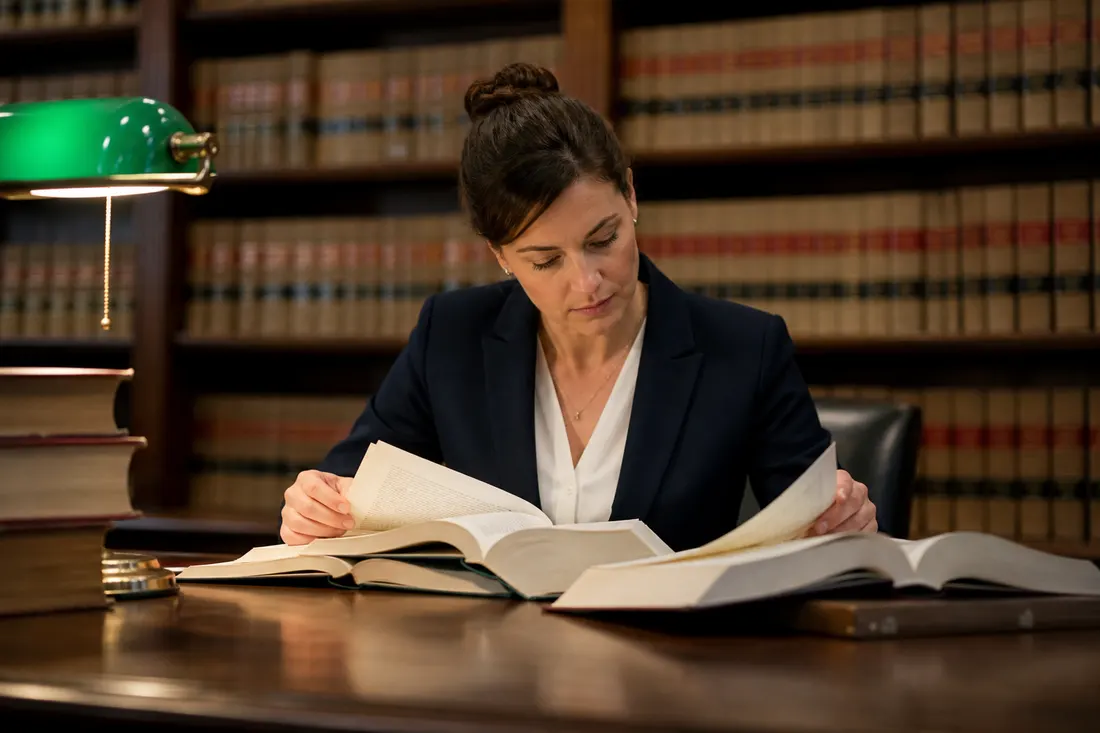
Those figures are useful, but they have a narrow meaning. They measure the stock and the age structure of enrolment at the ČAK. They do not measure demand for legal drafts. They do not measure how many research tasks a model has sped up. They do not measure whether clients have stopped going to lawyers. If we see ageing and a change in entry into the profession, we are reading a professional-body denominator. If we turn them into proof that AI is replacing lawyers, we are adding a cause that the source does not state.
This is precisely where the article differs from a general map of occupations. It does not ask whether being a lawyer is a safe job. It asks what a licence means. A stock of 13,319 lawyers is not an argument that the work is forever the same. It is a reminder that the legal effect of a service is not the same thing as the ability to write a paragraph about the law.
6. Passing the Uniform Bar Exam is not admission to the Czech Bar Association
Katz, Bommarito, Gao and Arredondo report that GPT-4, in their work, reached approximately 297 points on the Uniform Bar Exam in a zero-shot regime. For the written parts MEE and MPT the authors report an average of 4.2 out of 6.0. This is work published on a preliminary version of GPT-4, and it is an American examination context [13].
That is a significant signal of capability. The model managed a standardised legal examination better than many would have expected even recently. From that it does not follow that it may represent a client, take over a case file, keep confidentiality, assess Czech procedural consequences, or pass the Czech bar examination. The UBE is an examination with a key, essays, and a marking method. The Czech practice of advocacy is a legal relationship with a client, professional discipline, and liability.
Examination results are good for one thing: they break the comfortable idea that models are only toys for phrasing. They are not good for another: they must not be read as a licence. The question is therefore not whether a model can answer a legal question in a test. It is who may issue the answer as a service, who has checked it, and who will bear the price if it is wrong.
7. A hallucinated citation is not bad style
Dahl, Magesh, Suzgun and Ho examined legal confabulation in public language models on questions about randomly selected American federal decisions. They report that GPT-4 hallucinated in 58 percent of answers and Llama 2 in 88 percent. The population included, among others, US District Courts, US Courts of Appeals and the Supreme Court of the United States; what was measured was mismatch with the metadata and content of the case law. This is not Czech law, and it is not a verdict on every present-day model in every regime [11][12].
The reservation matters. These figures should not be transferred 1:1 onto the Czech Collection of Decisions. The study found better results on prominent cases, but on very old and very new cases hallucinations were more frequent; the result cannot be transferred onto Czech law. A firm tool with a governed database may have a different profile from a public chat. The study still shows something essential: a fluent legal paragraph can fail where the error is most expensive. Not in style, but in the support.
How to test a citation
Every decisive citation must go against the primary source. On a practice or anonymised text, check the name of the court, the file number, the holding, the legal proposition, and the scope of the conclusion. If the model names a real source, the work is not finished. It is necessary to verify that the particular passage actually supports the particular sentence. Fluency is not proof. It is only form.
8. Confidentiality does not transfer onto a public chat
A lawyer’s confidentiality is not a switch in a menu. It is a statutory duty of a particular person and of a circle of other persons in a particular legal regime. § 21 of the Advocacy Act protects facts of which the lawyer has learned in connection with the provision of legal services. The duty continues after striking-off from the list. The Act does not tie it to whether the text was written by a person or processed by a tool [1].
Putting a client case file into a public chat is therefore a different question from using a model for a practice draft. We are not only asking whether the model will answer correctly. We are asking who is the controller and the processor of the data, what retention applies, who has access to the interactions, whether the content is used to improve the service further, and how the audit is kept. An on-premise tool or a contractual enterprise regime may have a different profile. Even then the model does not become the bearer of confidentiality in the disciplinary sense.
Before putting a case file into a model
Is the account personal, public, or contractual? Is the text anonymised, or is it a live case file? Who approved the data flow? Can the output and the input be deleted under the contractual rules? And who is liable if a decisive fact leaves the permitted circle? Only after these questions does it make sense to talk about productivity.
9. An accountant is not an auditor
In ordinary debate, bookkeeping often melts into audit. In law they are different layers. Act No. 563/1991 Coll. requires the accounting entity to keep accounts so that the financial statements give a true and fair view. § 5 also provides that entrusting another person with the keeping of the accounts does not relieve the accounting entity of responsibility for the keeping of the accounts [2].
Act No. 93/2009 Coll., on auditors, deals with a different act. A statutory audit may be performed by an auditor or an audit firm with an authorisation under the Act. An auditor’s opinion is not the same thing as a well-kept spreadsheet. It is a regulated conclusion of a person who meets the statutory conditions and is subject to the rules of the profession [3][4].
AI can help in accounting. It can propose the posting of a document, recognise a recurring error, prepare a checklist, or explain the difference between an account and a line item. That does not mean the accounting entity has lost its responsibility. And it certainly does not mean that an auditor’s opinion has come into being. Software can speed up the working papers. A statutory audit is a different legal act.
Here it is important not to skip the word “entity”. Responsibility for the accounts is not only a personal label on the accountant in the office. The Act ties it to the accounting entity and at the same time allows the entity to entrust the processing to another person. Entrustment under § 5 does not, however, remove responsibility for the keeping of the accounts [2]. When a firm therefore adds AI between the document and the financial statements, the duty to know what happened does not disappear. Another processing layer is merely added.
The difference from audit is sharper still. An audit does not mean that someone “added the spreadsheet up a second time”. The auditor expresses an opinion under a statutory regime and professional rules. AI can help with analytics, sample selection, the search for an anomaly, or the wording of a working note. It cannot become a person with an auditor’s authorisation. If an organisation mixes these layers, a false sense of certainty appears: the system checked something, therefore it is an audit. It is not an audit. It is a control tool before the audit, or beside it.
10. 1,019 auditors are a licence for statutory audit, not the number of accountants in the economy
The Chamber of Auditors of the Czech Republic, in its materials, reports a total of 1,019 statutory auditors at the end of 2025. For comparison it reports 1,374 auditors in 2014 and 1,133 in 2020. For auditors as self-employed persons it reports 327 persons at the end of 2025 and a maximum of 647 in 2003. The Chamber’s text speaks of a falling number of auditors, ageing, and the need to promote the profession [5].

Here it is easy to write a bad headline. The number of auditors is falling, AI is rising, therefore AI is replacing auditors. The source does not say that. It shows the stock and the development of a professional-body population. It does not separate demography, the attractiveness of the profession, the difficulty of the examination, the labour market, pay, and technological substitution. And it certainly does not measure the number of accountants in the economy.
The meaning of the figure is narrower and more precise. 1,019 statutory auditors is the number of persons with a licence for a particular regulated performance as of a particular date. If a firm uses AI to check documents, the definition of a statutory audit does not change. If an auditor leans on an analytical tool, the opinion does not disappear. A saving of work can be real. A licence does not follow from it.
For the management of a firm a simple rule follows. A tool can be judged by speed only on a task that we are in fact handing to the tool. On a licensed opinion it is also necessary to judge the documentation of the review. The auditor or the accounting entity needs to know why the system proposed the item, where it took the input from, and whether a person saw the exception. Otherwise automation does not create certainty. It creates only a faster path to an unclear conclusion.
11. A translator on the market is not a court translator
Translation is the second field in which the sentence “the model can do it” is confused with the sentence “the authority will accept it”. The open market in translation includes e-mails, marketing, technical documentation, subtitles, and internal notes. There, machine translation can cut the price and speed the work. Some outputs are enough for orientation only. Others need revision. That is a market of quality and of responsibility under a contract.
Court interpreting and court translation are a different regime. Act No. 354/2019 Coll. ties activity before public authorities, and acts laid down by statute, to enrolment in the list of court interpreters and court translators. The Ministry of Justice sets out, for enrolment, requirements as to language, professional competence, and further conditions. The regime includes professional care, impartiality, and an oath [6][7].
A model can prepare a working translation for comprehension. It can be a pre-tool for a person. It cannot itself take an oath or bear impartiality. If the act is intended for a court, a notary, or another public authority in the regime of the Act, it is not decisive whether the output looks good. What is decisive is who performed it as an act.
As with advocacy, this is not resistance to technology. A court translator may use dictionaries, databases, memories, corpora, and a machine draft. What is decisive is that the result is not handed over by a machine. It is handed over by a listed person who understands why, in a particular sentence, a mix-up of “may” and “shall” is dangerous, why the name of a party is not cosmetics, and why a date or a negative particle can change the procedural meaning. A model can propose fluent Czech. Impartiality and professional care cannot, however, be read off from fluency.
12. BLEU is not a legal effect
BLEU was created as an automatic metric of machine translation. Papineni and co-authors in 2002 described a method based on n-gram overlap between a candidate translation and reference translations. It is a useful technical indicator for certain comparisons of systems. It does not measure whether a translation will stand as a legal act [14].
Callison-Burch, Osborne and Koehn already in 2006 pointed out that a higher BLEU is neither a necessary nor a sufficient condition of a better human quality rating, especially when systems with different strategies are compared. A translation can be close to a reference in parts and still change a decisive meaning. It can keep many words and swap a party. It can sound good and shift a legal relationship [15].
Court translation cannot solve this risk with a number. The act is not only textual similarity. It is meaning, impartiality, responsibility, and an identifiable holder of the authorisation. That is why the sentence “the machine has a high BLEU” is similar to the sentence “the student did well on the test”. It can be relevant to capability. It is not a stamp.
13. High-risk justice is not a ban on a research tool in the office
Regulation (EU) 2024/1689 lists in Annex III, among high-risk systems, inter alia AI systems intended for a judicial authority or a similar authority for alternative dispute resolution, to assist them in interpreting facts and the law and in applying the law to a concrete set of facts. That is an important boundary. It aims at a system for a decision-making authority, not automatically at every private chatbot of a lawyer [8][9][10].
From that it does not follow that office research is without rules. The lawyer still bears confidentiality, the duty to protect the client, and responsibility for the output. If a tool helps to prepare a filing, a person must not deceive the court with a fabricated citation. If it works with personal data or a trade secret, there must be a legal and contractual regime. The AI Act is not, however, a simple sign saying “lawyers may not use AI”.
Annex III, point 4, on employment must be read with the same care. It concerns recruitment, selection, evaluation, dismissal, or the allocation of tasks according to certain features in a work context. It is not a chapter on the disappearance of accountants. The regulation of a system’s use is not a forecast of an occupation.
14. A disciplinary code and an oath of impartiality do not transfer onto a model
Three professions are joined by a simple principle: the law addresses responsibility to a natural or legal person in a particular regime. A lawyer has a duty to protect the client’s interests and to keep confidentiality. An auditor takes an oath and is subject to the rules of the Chamber of Auditors. A court interpreter and translator perform an act under an obligation of professional care and impartiality [1][3][6].

A model can enter the working chain, but it cannot take over its end. If a lawyer signs a filing with a fabricated source, the client will not complain to the model. If an auditor uses an analytical tool and overlooks an error in the evidential information, the opinion remains the auditor’s. If a listed translator lets a machine convert the text and, without review, confirms a wrong meaning, the act is still the translator’s.
This is not nostalgia for hand work. It is a construction of responsibility. Regulated professions did not arise because a person writes a sentence more slowly than a machine. They arose because someone must be identifiable, qualified, controllable, and sanctionable. A model can raise performance in the middle of the process. It cannot become the addressee of disciplinary proceedings.
15. Three prices of error do not add up into one occupational risk
Legal advice, financial statements, and a court translation can look similar on the screen. All of them are text or a table. All of them can arise after a prompt. All of them can be fluent. Their error is paid for differently.
In advocacy the expensive error is often the support: a judgment that does not exist, a missed time-limit, a bad procedural strategy, a breach of confidentiality. In accounting the error can look like a small line item that travels into the true and fair view, but the accounting entity’s responsibility does not disappear because the entity itself entrusted the processor [2]. In court translation it can be a name, a date, a negative particle, or the relation between the parties. A high similarity of sentences does not guarantee legal usability.
Three licence tests
Advocacy: is it an internal draft, or the provision of legal services? Audit: is it the processing and checking of data, or an auditor’s opinion? Translation: is it a working conversion of text, or an act before a public authority? If the answer falls into the third part, we are no longer dealing only with the model’s capability. We are dealing with who may act.
16. Three columns on a practice text will say more than a headline about replacement
A practical test can be done without a live case file and without an attempt to circumvent a licence. Take a practice legal text, a public regulation, an anonymised document, or an old translation for which you have the correct solution. Divide the work into three columns. The first is the draft. The second is a check against the source. The third is an act tied to an authorisation.
In advocacy a model can propose the structure of a letter, but a person must verify the legal support and decide whether this is a service to a client. In accounting a system can propose the classification of an item, but the accounting entity is not relieved of responsibility and a statutory audit does not come into being. In translation a machine can supply a working version, but a court translation requires a listed person in the relevant regime [1][2][6].
What needs to be tested
Test an anonymised input, a public source, and the boundary of the authorisation. Watch where the model saves time and where it creates new review work. If the saving in the draft is lost in the checking of citations, that is not a failure of the whole technology. It is a more precise price of the result. And if the third column cannot be handed to a model, a headline about the replacement of a profession says more about the headline than about the law.
17. An amendment without a holder of the authorisation would break the thesis. It is not here yet
Every good thesis has a boundary. This one would be weakened by an amendment that allowed defined legal services, a statutory audit, or a court translation to be performed by a system without a holder of the authorisation. It would also be weakened by a Czech empirical series showing that models used in offices handle legal citations without expert review at a level comparable to responsible human research. Or by data from the ČAK, KAČR and the ministry according to which a decline in numbers, after demography and pay have been controlled for, would come from substitution by AI.
It does not yet have such material. That is why this should not be said as a fact. A narrower thing should be said: text tasks are exposed, legal effect is regulated, and responsibility stays with the holder. That is less striking than the sentence “AI will replace lawyers”. It is, however, more precise.
Precision in this debate does not slow adoption. On the contrary, it makes it possible. A lawyer can use a model where the lawyer knows what is being checked. An accounting entity can automate routine work if it does not lose responsibility. A translator can use a machine version if the translator does not pretend that a metric has replaced an oath.
The boundary of the thesis is practical for vendors as well. If a vendor sells a tool to lawyers, it should not promise the replacement of advocacy. It should show how the tool works with sources, how it limits data leakage, how it records the sources used, and how it hands review to a person. If it sells accounting automation, it should say where the proposed posting ends and where the accounting entity’s responsibility begins. If it sells translation for an authority, it must distinguish a working translation from a court act. A precise boundary is not weaker marketing. It is protection against a good tool being sold as a bad legal fiction.
18. The question is not which of these professions will fall. It is which act the law ties to a person
AI changes work with text, with sources, and with routine checking. For lawyers, accountants and translators that can matter precisely because their work contains a great deal of language. Language, however, is not the whole legal regime. A model’s capability and a licence are not one quantity.
A benchmark is not a signature. The Uniform Bar Exam is not admission to the ČAK. BLEU is not a court translation. Software for receipts is not an auditor’s opinion. And a high-risk judicial system is not the same thing as a private tool for preparing research. Once we separate these things, the simple dispute over whether AI will “replace” three professions disappears. A more practical map remains: which tasks can be sped up, which outputs must be verified, and which acts may be done only by a person who holds the authorisation.
A model can write a draft. The signature, the confidentiality, and the disciplinary responsibility stay with the person who holds the authorisation.
— Jiný Kontext
The right question is therefore not: can AI replace lawyers, accountants or translators? It is: for which of the three acts — a legal service, a statutory audit, and a court translation — does the law still require a holder of the authorisation, and where may a model speed up only a draft that a person with a stamp must check in any event?
Related texts in this series
- Which occupations will AI replace… — exposure of a task ≠ a licence.
- Can AI replace programmers? — different regulation, the same distinction between capability and signature.