

12:00
At 11:59:59 there is war. At 12:00 a ceasefire enters into force. If the order reaches the last position and the prepared salvo is not fired, a person who would otherwise die may live. That is not a small achievement.
But sovereignty, mines, prisoners, sanctions, destroyed homes and legal claims do not transform at the same second. The work of peace begins exactly where the photograph of the signature ends.
Stopping a war and resolving a war are two different things.
1. Words that look like an ending
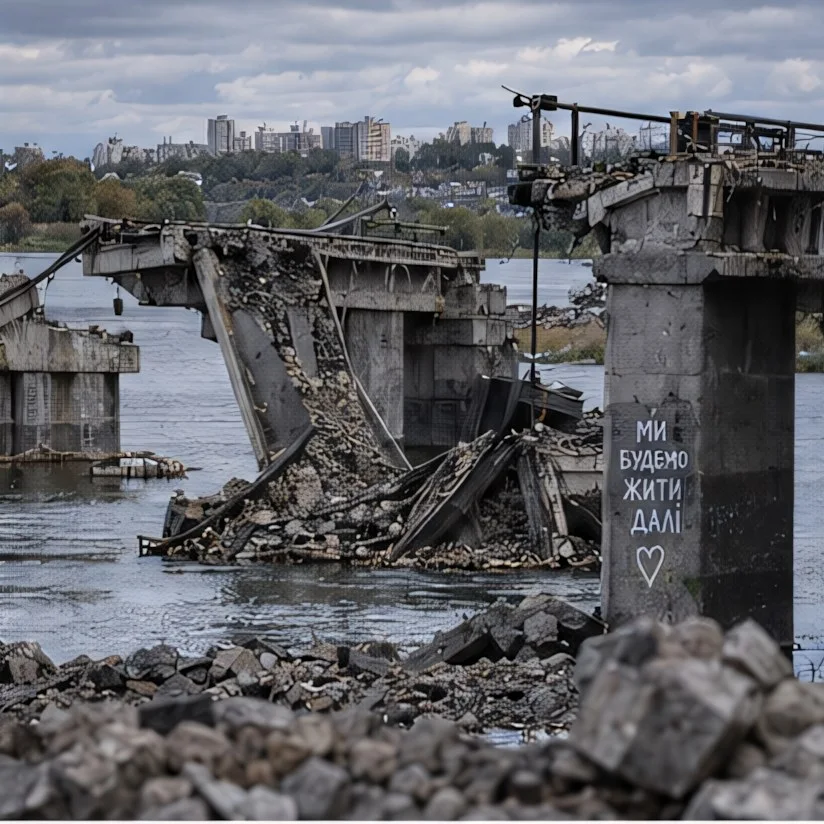
Ceasefire, truce, armistice, peace agreement and peace treaty do not form a universal legal hierarchy. Their practical meaning depends on the text, parties, legal form and implementation mechanisms. A “frozen conflict” is an analytical label, not a precise legal status.
The absence of organised shooting has immense value even when deeper political conflict remains. The error is either to reject any incomplete ceasefire or to present any silence as final peace.
2. Negotiation is not agreement. Agreement is not implementation
Talks can occur while positions remain far apart. Public demands may be bargaining positions, genuine red lines or both. BATNA describes the best alternative to a negotiated agreement; ZOPA the possible overlap between acceptable outcomes. Neither concept removes uncertainty about future power and incentives.
The parties need not only a text they can sign but a reason to believe compliance tomorrow will remain preferable to renewed war.
3. What must “we stop shooting” mean?
A military order needs an exact date, time, time zone and rule for weapons already in flight. It needs geography: front only, entire state territory, airspace, sea, ports and rear areas? It needs activities: attack, reconnaissance, mine-laying, electronic interference, cyber operations, rotations and fortification.
A useful document defines functions and effects rather than assuming that a word like “drone” or “fire” answers every operational question.
4. Where does the soldier stand at minute zero?
The contact line is not painted on the ground. It is an arrangement of positions, patrols, observation, fire control and uncertain spaces. A public open-source map may be suitable for readers and unsuitable as a legal annex for moving a platoon.
A ceasefire therefore needs reference coordinates, accuracy rules, treatment of rivers and bridges, procedures for disputed sectors and a mechanism for correcting cartographic error. Technical correction must be separated from political authority to move the line itself.
5. A zone without tanks is not a zone without war
Buffer, demilitarised, limited-forces and exclusion zones describe different restrictions. The agreement must state what is removed, what may remain, where distances are measured and how storage sites are inspected.
Long-range weapons can reach across a narrow zone. Such a zone may still reduce accidental contact, create warning time and make surprise harder. Its value is functional, not decorative.
6. An observer without access observes nothing
UN, OSCE, coalition and joint monitoring models have different political advantages. Every model still needs staff, movement, communications, security, money and access. A mandate written on paper does not drive a patrol through a blocked checkpoint.
The OSCE experience before 2022 showed why restrictions on movement matter. A future mechanism must specify what follows from denied access: a recorded violation, substitute verification, delayed benefits or another consequence.
7. A camera sees an explosion. It does not automatically see the order
Sensors can establish time, place, trajectory or movement. They may not establish who ordered an act or whether it is attributable to a state. Operational incident assessment, legal state responsibility and individual criminal guilt are different evidentiary questions.
The system needs standards for preservation of evidence, clock synchronisation, review and correction. Fast operational decisions should not pretend to be final criminal judgments.
8. The agreement must survive the first mistake
A stray drone, old mine, misidentification or local indiscipline can produce violence after a ceasefire. If any incident automatically reopens unlimited war, a single spoiler obtains veto power over peace. If organised attacks are endlessly excused as local accidents, cheating is rewarded.
A resilient design needs hotlines, local contacts, investigation, escalation channels and a way to distinguish isolated error from a pattern of intent.
9. Territory: several names, several maps
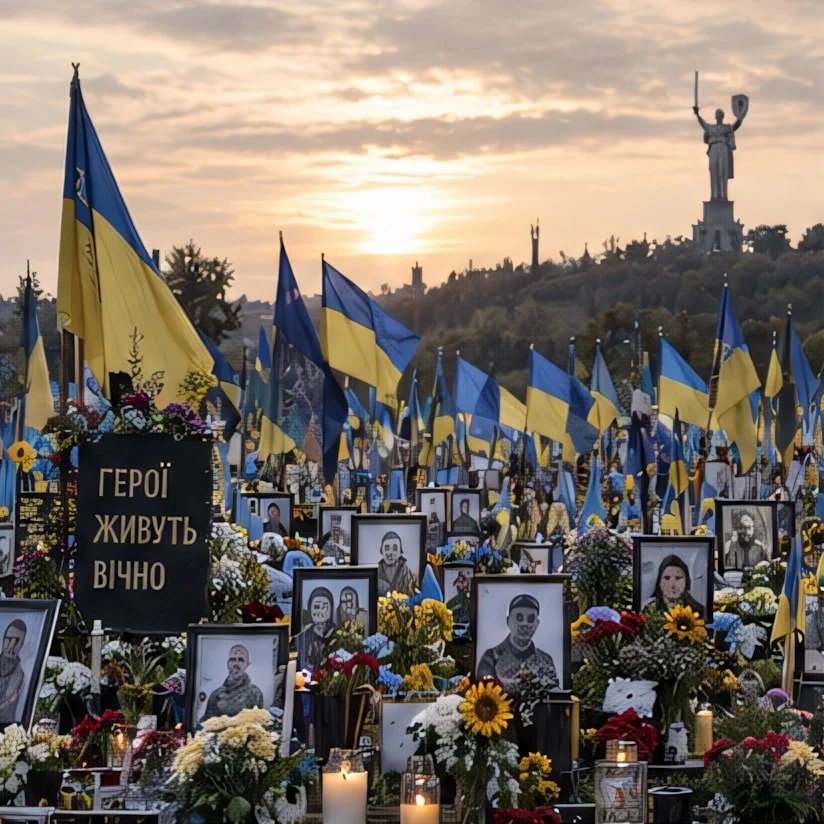
Internationally recognised borders, Russian claims, de facto Russian control, de facto Ukrainian control and a ceasefire line must remain analytically separate. The UN framework has continued to recognise Ukraine's territorial integrity despite Russian annexation claims.
A military can control territory without acquiring universally recognised sovereignty. A state can possess legal title without being able to exercise power there. Law and power answer different questions.
10. What can a president sign — and what can a signature not solve?
Ukraine's constitution contains rules on territorial integrity, referendums and the powers of president and parliament. Describing a ceasefire line without prejudice to sovereignty is legally different from recognising a new state border. Ratification, constitutional change and wartime legal restrictions can involve other institutions.
Russian law has incorporated claimed annexed regions into its domestic constitutional structure. That complicates a future Russian reversal without making international annexation lawful. Political will can open a legal process; it cannot honestly pretend that no process is necessary.
11. Six territorial models and the problem each leaves behind
Model A restores the 1991 borders in both law and fact. Model B recognises Russian sovereignty over some territory. Model C stops fighting without legal recognition. Model D explicitly postpones sovereignty. Model E creates a long-term special regime. Model F establishes a future decision mechanism.
These are analytical categories, not recommendations. Each changes the relationship between military control, legal title, domestic legitimacy and external recognition. A promise not to use force for territorial recovery is not identical to recognising the other side's sovereignty.
12. A referendum does not begin with a ballot
The first dispute would be the electorate. Should displaced people vote? Which date of residence counts? What about those who arrived during occupation or children who reached voting age abroad? The answer can determine the result before a single ballot is cast.
Freedom also depends on media, association, safety and the absence of coercive armed presence. International observation cannot make an otherwise impermissible question lawful by itself.
13. The apartment with two owners
Imagine an owner who fled Mariupol, a destroyed building, reconstruction under occupation and a new resident holding documents issued by another administration. One registry names owner A, another resident B. A settlement must distinguish title, possession, compensation, good faith, destroyed property and newly created assets.
The problem extends to farms, companies, shares, contracts and inheritance. Peace requires claims institutions, evidence rules and appeal, not a slogan about “returning property”.
14. Security: what exactly does it mean that someone will help?
Ukraine needs reason to believe renewed Russian attack will fail or cost too much. Russia may seek predictable limits and transparency measures it describes as security interests. Recognising the existence of a security concern does not give a legal right to use force against a neighbour.
“Assurance” and “guarantee” are labels. The operative verbs matter: consult, supply, deploy, defend, sanction. Who decides, within what time, under what domestic authority?
15. NATO: a stronger system, not an automatic machine
NATO's Article 5 treats an armed attack on one member as an attack on all, and each ally assists by action it deems necessary, including armed force. This is a powerful collective defence commitment embedded in institutions and military planning; it is not a sentence saying every ally automatically declares war in the same form.
For Ukraine, alternatives such as delayed membership, neutrality, bilateral guarantees or another collective arrangement all create different gaps and risks. A political word must be translated into military and legal content.
16. Hour one: when does a promise become action?
Suppose a unit crosses the agreed line after settlement. Who detects it? What standard activates the guarantee? Can Ukrainian forces defend themselves while attribution is investigated? Must a guarantor's parliament vote before assistance? Are air-defence assets and supplies already available?
Credibility depends on expected speed as well as nominal strength. A promise that arrives after the objective is lost may have little deterrent value.
17. Foreign soldiers: five different jobs
Observers report. Peacekeepers may separate forces and protect a mandate. Trainers develop local capability. A deterrent contingent changes an attacker's calculation partly because foreign personnel would be exposed. Combat forces must be able to conduct actual defence.
Calling all of these “peacekeepers” removes the most important information: what they are authorised and able to do.
18. Sanctions: one agreement, many foreign legal systems
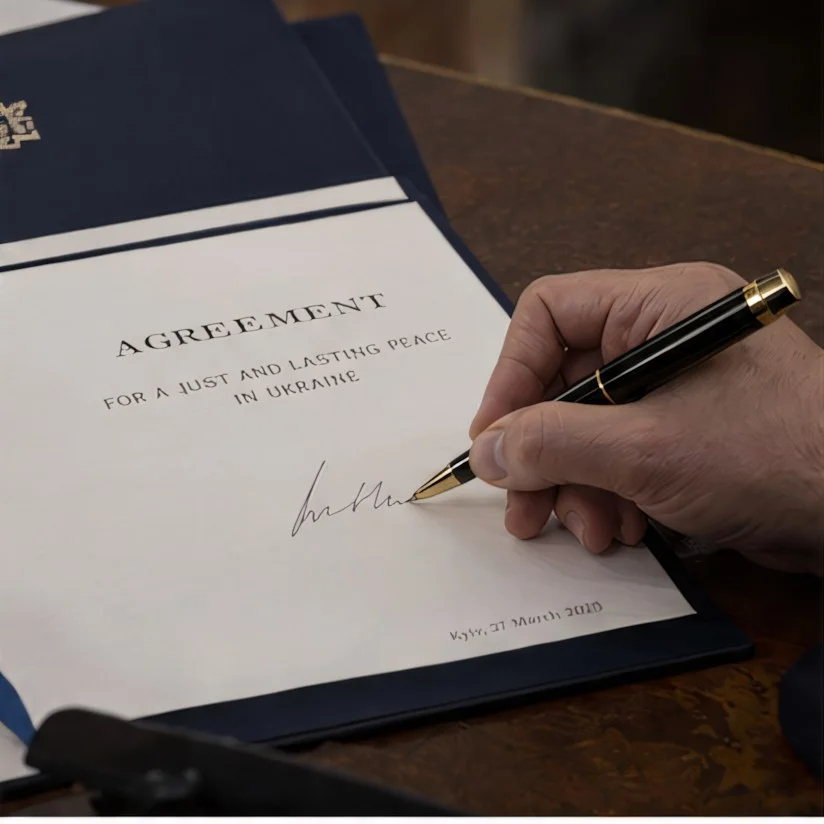
EU, US, UK and other measures have different legal bases, targets and decision procedures. Some concern persons, others finance, trade, energy, technology, transport or occupied territories. A bilateral Russia-Ukraine document cannot automatically command third states to repeal their own laws.
A settlement may link verified steps to suspension, licensing or lifting, and may provide for snapback. But snapback must specify who determines breach and whether renewed measures require a fresh political vote.
19. Russian assets: freezing is not a transfer of ownership
Private property, sanctioned property, Russian state assets, central-bank reserves, income generated from immobilised funds and loans backed by future income are not one legal category. Freezing usually restricts use; confiscation requires a separate basis; using income is not necessarily taking principal.
Any settlement must distinguish these categories and the institutions with authority over them.
20. Reconstruction is not reparation
Reconstruction asks how to restore homes, hospitals, water, transport and economic life. Reparation concerns legal responsibility for injury and the remedy owed by the responsible actor. Donors can finance reconstruction before a final reparation mechanism exists.
The Czech master cites the 2026 RDNA5 assessment, which estimated ten-year recovery and reconstruction needs at roughly 587.7 billion US dollars and direct damage at about 195.1 billion as of the end of 2025. These are methodologically different categories and not a final bill for a continuing war.
21. Mines: a war that ignores the ceasefire order
Mines, unexploded ordnance and contaminated land keep injuring people after active fighting stops. Clearance requires mapping, access, specialists, equipment, funding and years of work. Agricultural land, roads and housing can remain unusable even under perfect political compliance.
The end of fire is therefore not the end of physical danger.
22. Return is not a bus ride home
Refugees and internally displaced people decide under conditions of security, housing, employment, education, health care and family connection. A legal declaration that return is permitted does not make it safe or sustainable.
Policy must also avoid turning temporary protection abroad into forced return before conditions exist. Voluntary, safe and dignified return is a process, not a statistic.
23. Prisoners, civilian detainees and people whose whereabouts are unknown
Prisoners of war have a specific humanitarian-law regime. Civilian detainees are governed differently. Deportation or transfer of children raises separate obligations. Missing persons require tracing, records, identification and communication with families.
A single “exchange” headline therefore cannot close every human file created by the war.
24. Justice: an agreement is not an eraser for a court file
Peace negotiations can collide with prosecutions. Individuals fearing arrest may have personal reasons to obstruct settlement. Yet automatic impunity can damage victims' trust and the credibility of future rules.
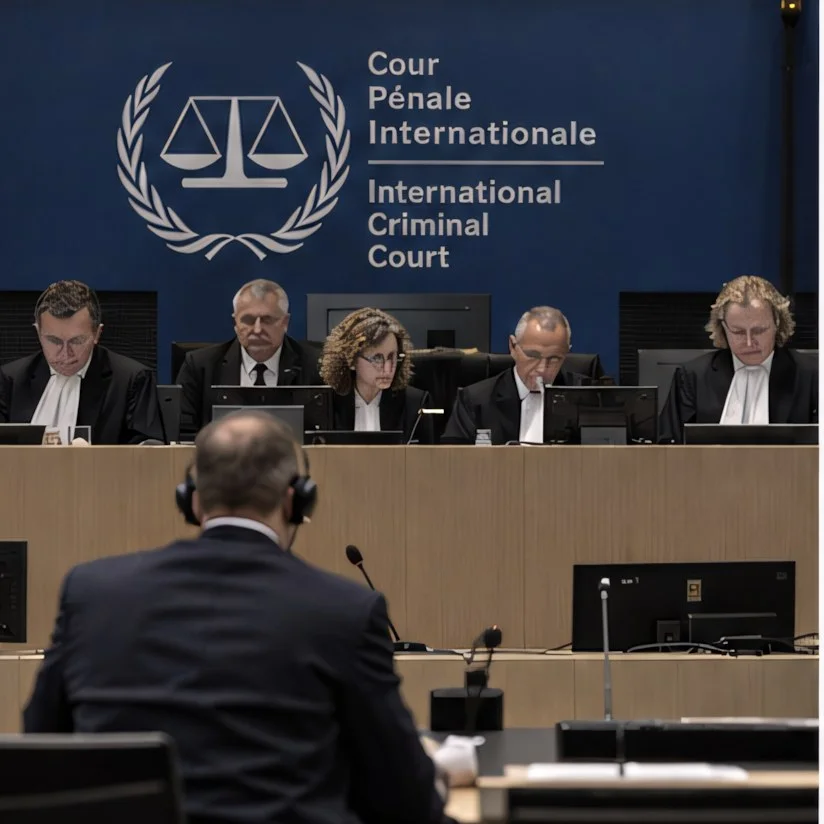
The International Criminal Court addresses individual criminal responsibility within its jurisdiction; it does not settle every interstate dispute. Domestic courts, international mechanisms and any negotiated transitional arrangements must be distinguished.
25. Zaporizhzhia nuclear plant: peace is more than one repaired power line
A nuclear facility needs staffing, cooling, external power, maintenance, security and emergency arrangements. Territorial status, technical operation and nuclear safety are related but not identical questions.
Any post-war arrangement around the plant would need a technically credible operating regime and monitoring, not only a political label on a map.
26. Water, energy and sea: infrastructure ignores diplomatic chapters
Rivers cross lines. Electrical grids interconnect regions. Ports depend on channels, insurance and navigation. Water systems connect reservoirs, pumps and cities. Infrastructure can therefore force cooperation even when sovereignty remains disputed.
Technical agreements may need to function before the political relationship becomes friendly. Their success can be one of the practical foundations of stability.
27. The European Union and an economy that must work without war
Ukraine's European integration, reconstruction finance, trade access, regulation, investment and labour movement will interact with any settlement. EU decisions are made through institutions that are not parties to every Russia-Ukraine negotiation.
Economic normalisation will therefore be a multilateral legal process as much as a bilateral political one.
28. People do not demobilise with a signature
Veterans, wounded personnel, families, displaced people and wartime workers carry the conflict into the post-war period. Demobilisation requires health care, benefits, retraining, employment, housing and institutions capable of handling grievance without violence.
The state itself must shift from emergency mobilisation to normal governance while preserving credible defence.
29. Minsk: the problem was not only sequence, but sequence was part of the problem
Minsk II combined ceasefire, heavy-weapon withdrawal, monitoring, elections, constitutional arrangements, special status and eventual border control. The sides disagreed profoundly about what had to happen first and what security was sufficient for political steps.
The lesson is not that every agreement is futile. It is that ambiguous sequencing can turn the whole implementation mechanism into a dispute over who is already in breach.
30. Five histories, no photocopier
Korea shows the longevity possible under an armistice without a final peace treaty. Sinai demonstrates precise zones, verification and a multinational mission. Bosnia demonstrates externally supported institutional engineering. Cyprus shows a durable cessation of major fighting without final political resolution. Northern Ireland illustrates parallel attention to security, institutions, representation and social legitimacy.
Each case differs fundamentally from Ukraine. History offers mechanisms and warnings, not ready-made settlements.
31. Order is part of the substance
The first 24 hours should test command transmission and immediate compliance. The first week tests communication, access and incident handling. The first month tests withdrawals and verification. The first year tests institutions, elections where lawful, reconstruction and public finance. Ten years test whether the system survives leadership change.
Conditions need an adjudicator. “After compliance” means little if the parties disagree forever about whether compliance occurred.
32. Six paths — and the price of each
One path seeks military restoration of all territory before settlement. Another freezes the line without recognition. A third trades territorial compromise for a wider settlement. A fourth postpones sovereignty while building security. A fifth places exceptional weight on external guarantees. A sixth leaves the conflict partially unresolved but tries to make renewed war prohibitively costly.
These are not predictions or recommendations. They show that every route reallocates risks among territory, legality, security, domestic legitimacy and time.
33. So what does the end of war mean?
The end can mean cessation of major hostilities, a functioning armistice, a legal peace treaty, restoration of diplomatic relations or a social condition in which ordinary life no longer assumes renewed war. These milestones may occur years apart.
A durable settlement is not the moment every disagreement disappears. It is the point at which disagreement can be processed through institutions more credibly than through organised violence.
Back to 12:00
At noon the guns fall silent. The most urgent success is immediate: people who would have been killed are alive. Then the harder work begins — verifying the line, answering incidents, returning people, clearing mines, rebuilding systems, resolving claims and making future political change less dangerous than war.
The quality of peace is therefore tested not in the ceremony but in the ordinary day that follows it.
A ceasefire is the beginning of the answer, not the answer itself.