
An exemption from the register of contracts may protect sensitive technical information, but it can at the same time weaken the public trail of price, guarantees and amendments. A contract that is in force need not be publicly readable, and a blacked-out version need not allow the escalation formula to be checked. Commercial secrecy, legal effect and oversight of public money must therefore be assessed separately.
What we know: The register of contracts act in force links, for contracts within its scope, publication with legal effect, and at the same time allows protected data to be rendered unreadable. The public version of the Dukovany EPC contract already contains blacked-out passages.
What we do not know: Without the final text and the course of the legislative process it is not possible to claim which contracts and metadata will in fact be exempted, nor what substitute scrutiny will remain for the public.
1. The investor’s certainty is not the taxpayer’s certainty
Imagine a meeting on the low-carbon energy act amendment. The ministry of industry and trade lawyer wants an exemption from the register of contracts, because the investor needs certainty that sensitive annexes will not end up in a competitor’s lawsuit. The manager of Elektrárna Dukovany II shows that part of the EPC contract is already in the register and that unit prices are blacked out. The European Commission official recalls that the state-aid notification is running in a non-public file. An opposition MP asks to see the escalation clauses before they feed into the electricity price. A journalist opens smlouvy.gov.cz and hits black bars. The SAI auditor says the file will reach him after the fact.
At first glance this is a dispute about secrecy. In reality each person is describing a different problem. The ministry lawyer compares the risk of know-how leaking. The project manager integration with the supplier. The Commission official compatibility with state-aid rules. The MP the ability to scrutinise the executive. The journalist timeliness. The auditor powers, not publicity.
The investor’s demand for legal certainty and the public’s demand for scrutiny do not overlap automatically. A legislative solution must describe separately the protection of technology, the risk of disputes, the predictability of return, the visibility of guarantees, access for oversight institutions, and the ability to correct a faulty amendment before it feeds into the tariff.
The first important distinction is therefore not whether to build Dukovany. It is what exactly is to be the subject of secrecy. Otherwise we place a reactor drawing, an escalation formula, a state loan and a contract for difference side by side and are surprised that each needs a different regime.
A contract is not a guarantee. A guarantee is not a tariff. A tariff is not public debt. And an exemption from the register is not the disappearance of risk.
— Jiný Kontext
2. What the public scrutinises in a contractual regime
When a PDF appears — or does not appear — on a website, it is easy to form the impression that “the state published the contract” or “the state hid it”. The result, however, usually arises in a chain of several layers. Each can increase scrutiny, reduce it, or change the type of error. Two documents with the same title therefore need not say the same thing, and the same document may behave differently according to whether it is in the register, blacked out, withdrawn, or only in a vault.
Five layers of one contract
- Existence and effect: whether the obligation is binding between the parties even if the public cannot see it.
- Price and risk content: who bears extra costs, delay, inflation and a change of exchange rate.
- Publication regime: a full PDF, redaction under the register act, or an exemption.
- Amendments and options: changes that can move price and time without a new headline in the papers.
- State aid and the tariff: a state loan, a balancing payment and the pass-through into the electricity price.
The basic contract text determines an important part of the relationships, but it is not the only actor. An explanatory memorandum can insert a different purpose before the text. An amendment can change escalation. Notification to the Commission can see the contract without the citizen seeing it. The regulator can calculate the tariff from a figure that is not in the register. A company lawyer can label the same formula as a trade secret, while an MP labels it as public debt.
This is precisely where the first error of public comparisons arises. A headline announces a contest of “transparency versus security”, but in reality it compares a drawing with a price formula, or an EPC contract with a contract for difference. An honest comparison must state not only the name of the act, but also the type of contract, whether it has already been published, what of it can be blacked out under the existing rules, and who else will still see the file.
This layering is not an academic detail. It determines where to turn when something fails. If the public does not know yesterday’s amendment, the register may have been missing. If it overlooked an inflation clause in the middle of an annex, redaction may have failed. If the tariff rose and the PDF disappeared, the problem may have been the exemption and the absence of a substitute report. The sentence “the contract is secret” is the beginning of a diagnosis, not its end.
Illustrative diagram: The same project can, in a different publication regime, with different amendments and a different notification, create different scrutiny.
3. The best regime is the one whose error you will see
Minimising the leak of know-how is a legitimate aim, but a publication regime must also be judged by how detectable and correctable an error is. The leak of a technical drawing can cause a different kind of damage from an invisible escalation clause that later appears in the price. With a partly published document a review of the scope of redaction can be requested; with a complete exemption no public trail of scrutiny arises.
The Constitutional Court, in judgment Pl. ÚS 32/17 of 22 January 2019, dismissed a proposal to repeal the register of contracts act. The aim of the act, according to the court, is the publication of selected contracts in which at least one party is an entity tied to public funds, and thereby also a scrutiny function under the right to information and the right to take part in the administration of public affairs. The court at the same time recalled that a trade secret can be protected inside the existing act. This is a judgment on the constitutionality of the register as a whole, not a verdict on a specific amendment from 2026.[11]
| Type of failure | What it looks like | How to test it | What limits the harm |
|---|---|---|---|
| Leak of know-how | A drawing, a process, a unit margin in an open PDF | Separate the technical annex from the price formula | Redaction, not an exemption of the whole title |
| Invisible escalation | An amendment changes the price, the public does not see it | A mandatory summary of changes to price and time | Periodicity of a report, even if the PDF is missing |
| Loss of trail | Withdrawal of a record already published | Whether legal effect survives inaccessibility | An archival imprint, a ban on silent deletion |
| Substitution of the overseer | “The Commission can see it” is read as “the citizen can see it” | Who has the file, when, and what may be said outside | A mandate for parliament and the SAI in real time |
This also changes the legislative question. We do not ask only which regime better protects the supplier. We ask which regime will fail in a way that our process will catch. A supplier may tolerate the public not seeing a welding procedure. A taxpayer cannot tolerate the same regime hiding who pays for delay. An MP may accept redaction if the net risk formula is visible. He cannot accept withdrawal of the whole title without a substitute.
Alongside the protection of technology it is necessary to measure the traceability of money, the possibility of reviewing a change, and its impact on the tariff. A regime with precisely delimited redaction and a public summary of guarantees may preserve more scrutiny than a complete exemption; the specific scope, however, must be set by statute.
4. What the register shows and what it does not
The register of contracts is needed because it replaces part of impressions with repeatable publication. Act No. 340/2015 Coll. makes the effect of selected private-law contracts depend on publication. At the same time it allows information that cannot be provided under the rules on free access to information, including trade secrets, not to be published. That is a map of the duty. It is not a verdict that Dukovany is advantageous, nor a verdict that it is disadvantageous.[1]
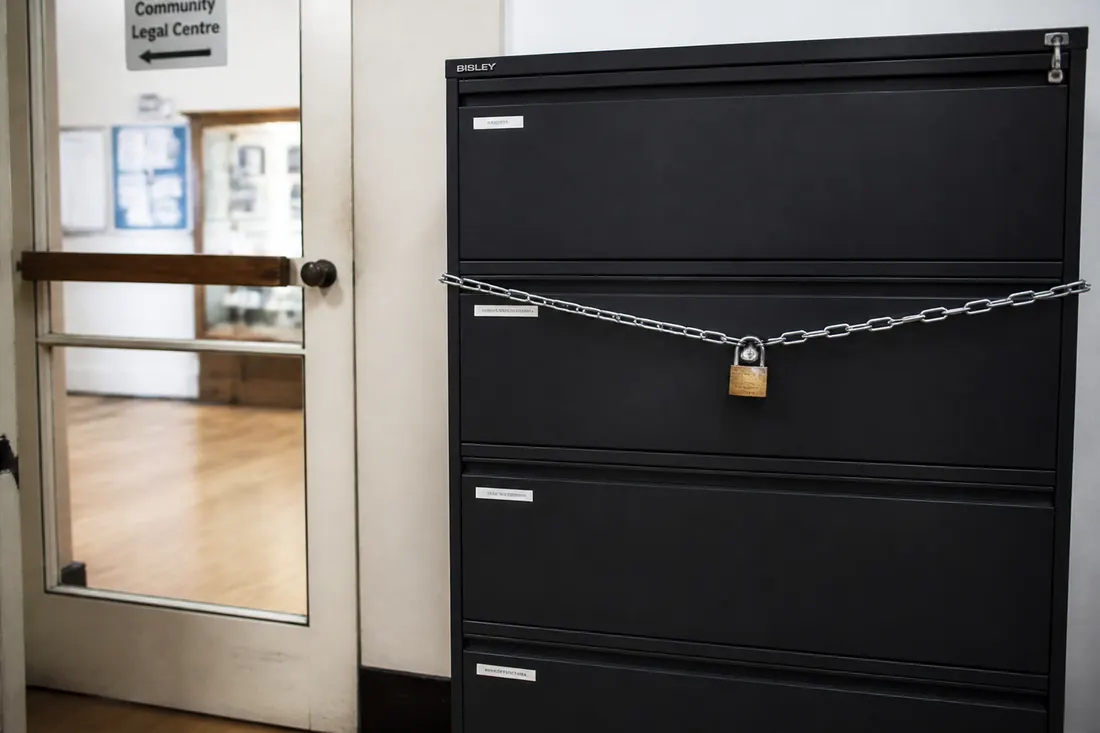
Every exemption contains hidden decisions. Which types of contract? Only EPC, or also offtake, the balancing regime and the loan? May a record already published be made inaccessible? Does it apply to amendments? To the option for Temelín? To fuel? An answer to any of these questions can change what the citizen still sees.
Five facts without which an “exemption for certainty” is only an advertising sentence
- An exact list of contracts and amendments to which the regime applies.
- Whether the condition of effect upon publication is cancelled, or only visibility.
- Whether an already published record can be withdrawn without loss of effect.
- Who else sees the file, at what time and with what reporting duty.
- How a change of price and time reaches the public when the PDF disappears.
For the legislator, therefore, a small list of objects matters more than the broad word “strategic”. Thirty real clauses — with a real effect on the tariff, a Czech text and a clear bearer of risk — may say more than a reference to “the practice of the European Commission” without citation of a specific requirement of secrecy. A public register will help select what can be blacked out. The decision on an exemption must do the work with a list.
5. Compare certainties, not logos
The scheme divides demands according to whether they protect technology, the investor’s legal position, public scrutiny of price, or the powers of an oversight body. Each certainty has a different proof and a different typical failure.
| Actor | Main certainty | What to verify in the amendment | Typical reason for the choice |
|---|---|---|---|
| Investor / supplier | Protection of margin, know-how, fewer lawsuits | What exactly cannot be blacked out under the existing rules | Lower procedural risk |
| MIT | Alignment with the support model and the notification | Whether the Commission requires secrecy of the register, or merely tolerates it | Speed of closing |
| European Commission | Proportionality of aid, less distortion of the market | The public version of the decision vs. the confidential file | Supervision of state aid |
| Taxpayer | Who pays extra costs and delay | Visibility of the formula, not visibility of the logo | The bill in the household statement |
| Parliament / SAI | Timely access and a report | Whether access comes before the tariff, or after it | Scrutiny of the executive |
The rows are not a judgment on the project. The same state offers more than one contract, and each may change during construction by an amendment. The map is meant to prevent a different error: that the legislator buys excellent protection of technology in a regime that cannot see his bill, cannot show it in time, or locks it into an environment from which it is later hard to leave.
How to read the scheme: The position of the elements does not express a score. The diagram separates protection of sensitive information from scrutiny of price, guarantees and amendments.
6. Legal effect is not the same as visibility
The register of contracts act stood on a simple lever: a selected contract of a public contracting authority takes effect upon publication. The point was not to harass officials. It was to create a universal trail. If a state enterprise or a ministry signs a multi-billion contract, the public should see at least the parties, the subject, the price where it is not a secret, and the existence of amendments.[1]
An exemption from the register does not mean the disappearance of the contract. It means that the condition under which the contract lives in public space is changing. The citizen loses the position of overseer in real time. He becomes the payer of a future bill whose items he will see later, elsewhere, or not at all. Rekonstrukce státu and Frank Bold defended this lever mechanism also in the dispute over exemptions for state firms: the register is a tool, not a duplicate of the free-access-to-information act. That is an institutional reading. It is not proof that every Dukovany annex must hang open.[12][13]
The existing act already knows how to black out. The Constitutional Court expressly took that into account in 2019. The dispute of 2026 is therefore not about whether a secret may exist. It is about whether the existence of some titles should disappear as well, and whether records that the public has already seen once should be allowed to be withdrawn.
That is more important than a dispute about the word “transparency”. A blacked-out contract in the register still says: this amendment exists, this date applies, this party signed. A withdrawn or never-published title says nothing. Scrutiny moves from remote access to a request, a security clearance, a mandate or chance.
7. Anatomy of the proposed exemption: what is to leave the register
In August 2026 a draft amendment to Act No. 367/2021 Coll., on measures for the transition to low-carbon energy, and related rules, was described in public. The cited materials do not, however, contain in this article a verified final version from eKLEP or the outcome of the legislative process. The further description is therefore a summary of public specialist reporting, not a claim about law already in force.[2][3]
According to this public description the exemption is to aim, among other things, at:
- contracts on the offtake of electricity and the contract on the balancing regime, that is an analogue of a two-way contract for difference (CfD);
- contracts on the provision of repayable financial assistance, that is the terms of the state loan for construction;
- a publicly mentioned possibility of making some already published documents and amendments inaccessible without their losing effect; the exact scope must be confirmed by the final wording of the draft.
The draft is to introduce a balancing regime as the basic support model, while the offtake contract is to remain an alternative if the government sets it by resolution. The ministry justifies this by the Commission’s decision-making practice, which prefers a balancing regime. This is a reading of the explanatory memorandum and reporting on eKLEP, not a citation of a Commission decision that the register of contracts must be switched off.[2][3]
The difference between “black out the unit price” and “do not insert the title” is practical. In the first regime the citizen sees that amendment No. 4 exists, even if he does not see every cell. In the second he does not even see that the amendment arose. The dispute is therefore not about the protection of detailed drawings. It is about the trail of the financial formulae according to which the taxpayer’s bill may change.
What needs to be tested
The first test concerns the list. Which specific types of contract does the amendment exempt, and which does it leave in the register? The second concerns retrospective inaccessibility: whether a record that was already public can be withdrawn, and whether that implies a loss of effect, or only a loss of eyes. The third concerns the Commission: where is the sentence that a public register endangers the notification, and where it is the ministry’s preference. Without these three supports, “alignment with Brussels” is a broad word.
For the project, integration of contracts may be decisive. For the legislator, however, the sentence “we are protecting the investor” is not enough. He needs to know the type of title, the owner of the data, permitted withdrawal, export of a summary, and the boundary beyond which a person with a mandate must approve the change.
8. Redaction is not the same as deletion
Elektrárna Dukovany II published in the register of contracts the EPC contract with KHNP and the fuel contract. Government and company communication after the signing on 4 June 2025 stated a price of two units of CZK 407 billion at the 2023 price level and a unit price per block in the order of CZK 200 billion. The fuel contract was communicated separately, in the order of CZK 15 billion. These are prices of the works at the given price level, not the sum of interest, the grid, preparation and future escalation. A large part of the published PDF is blacked out: according to the contracting authority because of security, intellectual property and copyright, including passages on price, completion and subcontracting.[4][5][6]
This is a regime that the existing act knows. The public sees that the title exists, even if it does not see every cell. If a future exemption also covered metadata without a substitute public overview, this trail could disappear from the register; other scrutiny channels would not automatically vanish thereby. The scope cannot be claimed categorically without the final text of the amendment.
Imagine an amendment. It is not a report. It is an illustration of the mechanism. In 2026 the state announces a unit price per block in the order of CZK 200 billion and takes the contracts and amendments out of the register. In 2031 the supplier applies a non-public escalation clause in amendment No. 4. The price of the block rises by tens of billions. The taxpayer learns of it at the moment when the regulator feeds a higher guaranteed price into the component. Retrospective scrutiny of whether it was justified is, for a person without a mandate, legally and factually different from a record that hangs in the register at least as a blacked-out PDF with a date.
It does not follow that escalation is fraud. It follows that the place of scrutiny has shifted. Redaction changes what can be read. Deletion changes whether we even know that there is something to read.
9. Dukovany II: where know-how ends and the bill begins
The project of two new units at Dukovany belongs in scale among the largest publicly supported investments in the modern history of Czechia. We do not document here an exact ranking among historical contracts. Large scale itself does not justify an arbitrary regime; it does, however, raise the price of a possible error in oversight.

The dispute about the register often poses as a dispute about nuclear safety. SÚJB, however, oversees the licence, not whether the CfD formula is in the PDF. Safety supervision and financial supervision are not the same. A technical drawing belongs in a different vault from a clause that says who pays for delay in concrete. If the amendment wraps both in the word “strategic”, it compares a reactor with an accounting table.
International LCOE models, for example publications of the IEA and OECD NEA, show the sensitivity of nuclear economics to construction time and the cost of capital. This is not an audit of Dukovany, and from these studies it cannot be proved that time escalation will always be more expensive than secrecy of a technical annex. The practical question is narrower: whether the public regime will show in time who bears the costs of delay.[16]
The option for further units, mentioned at the signing, extends the trail beyond one site. An exemption written for “key contracts for new nuclear sources” is therefore not to be read only as Dukovany. It is to be read as a template. A template is useful if it is narrow. It is expensive if it is broad.
10. The contract for difference and the state loan: the raw material is not the result
The market uses several price languages at once. EPC is the price of the works at a price level. Interest is the price of time. A CfD or a balancing regime is the price of stability of return. Repayable financial assistance is the price of public capital. The tariff is what the household finally sees. A direct comparison of “a contract for 407 billion” without these columns misleads.
Cheap secrecy of an annex can be economically excellent if it prevents supplier speculation. The same secrecy can be expensive for a clause that the taxpayer will pay for twenty years. Expensive publicity of every page can be unnecessary for a welding procedure. It can be cheaper for a formula that reduces the number of later disputes about “what they promised”.
The true price of the accepted regime
Licence and safety + EPC + fuel + grid + interest + balancing payment + human scrutiny of amendments + the price of invisible escalation + a future precedent.
The result is cheap only when it passes the check of the bearer of risk and can be used in the tariff. Not when it disappears from search.
The Commission, in Decision (EU) 2025/429 of 30 April 2024, assessed support for the construction and operation of a new unit at Dukovany (SA.58207) among other things so that the aid would not exceed the funding gap and would not distort the market more than necessary. The original notification concerned one unit. The extension to two units and a change of the investor model led to further assessment. In December 2025 the Commission opened an in-depth investigation into support for two units (SA.117794). This is supervision of state aid, not an order to switch off the Czech register.[7][8]
It is therefore useful to measure the price by accepted oversight, not by the number of blacked-out pages. Accepted means that a change of price and of the bearer of risk is visible in time, even if the drawing is not. This metric can reverse an order that looked unambiguous for the reason “investor certainty”.
11. The European Commission sees the file. The taxpayer does not
Supporters of the amendment often join two sentences: the Commission sees the contracts, therefore scrutiny exists. That is reasonable, but incomplete. The Commission sees what is the subject of the notification, in a confidential regime, with a different purpose and a different time. The purpose is compatibility of aid with the internal market. The purpose is not ongoing civic scrutiny of amendments. The decision is published in a non-confidential version. Annexes remain in the vault.
Two similar files can therefore have a different data regime. Notification SA.58207 approved support for one unit under set conditions, including a shortening of the period of direct price support and a formula close to a two-way CfD. Investigation SA.117794 asks among other things whether the aid package is superfluous and whether risk is being shifted onto the state. That is a European map. It is not the Czech register.[7][8]
Two similar bills can have a different regime of eyes
An official in Brussels may read a confidential file and may not turn it into an information sheet for a household. An MP in Prague may want an information sheet and need not receive the file. A taxpayer may want both and will receive a tariff. If the amendment says that “scrutiny remains because the Commission can see it”, we are testing a different product from the one the sentence promises. It may be correct as a notification. We must name it that way.
The Czech ministry may have a good reason to align the balancing regime with Commission practice. It does not follow that alignment requires silence in the register. It follows that it is necessary to show the sentence where the Commission forbids publicity, and the sentence where the ministry merely does not want publicity.
12. The SAI, SÚJB and the Chamber have different mandates
Before the exemption the citizen checked whether the contract was hanging. With the exemption he checks something more complicated: whether the SAI received the amendment in time, whether a Chamber committee saw the formula, whether SÚJB happens to be watching something else, and whether the summary the public receives really supports the sentence about “full scrutiny”. Citation of an office is navigation to a mandate. It is not an automatic mandate for publicity.
SÚJB oversees nuclear safety and licensing. The SAI checks management within the scope of its statutory competence and according to its audit plan; it is not continuous public scrutiny of every amendment. The European Commission assesses state aid. These mandates overlap with the register of contracts only in part and do not themselves offer the public the same ongoing remote access.[9][10]
Four-step check of substitute oversight
- Existence: the body really has the file, not only competence on paper.
- Time: it sees the amendment before it enters the tariff.
- Support: the report to the public supports a specific sentence about price and risk.
- Scope: the unit, the period, the currency and what remained confidential all fit.
The most reliable procedure therefore separates safety, aid and money. First a table arises: who sees the drawing, who sees the CfD, who sees the loan, who sees amendment No. 4. Only then the sentence “scrutiny remains”. If the body cannot say outside at least the change in the overall guarantee, the claim is not promoted to publicity merely because the office exists.
Three tests of substitute scrutiny
The first is temporal: when does the body receive the file and when does the tariff change? The second is about origin: is it the full text, or a summary written by a party to the contract? The third is about contradiction: is there a credible channel that challenges the conclusion of “zero risk for the state”? A product that announces the exemption a week earlier need not be better if in five years nobody can find out why the bill rose just so.
13. The privacy of a contract is not a switch. It is the whole flow of amendments
The question “is it trained on my data?” sounds narrow in another field. Here the question “is it a trade secret?” sounds narrow. An organisation must also know where amendments are stored, for how long, who has access to them, whether records of withdrawal from the register are kept, which third parties see balancing payments, and whether an agent on the supplier’s side sends a price change to the next link in the chain. “We do not publish in the register” does not mean “nothing is retained” nor “nobody will see anything”.
The differences between consumer curiosity and a parliamentary mandate are marked in the law. It does not follow that every contract belongs on the internet in full wording. It follows that the security of know-how cannot be judged by the project logo without a list of titles, withdrawals and a substitute report.
The practical minimum is a flow map. It begins at signature, continues with registration or exemption, amendments, notification, tariff regulation, and ends at the place where a price change can still be reversed. Without this map a claim of certainty is only a description of one part of the pipe.
Act No. 367/2021 Coll. already today regulates support for low-carbon sources and shareholder relations with Elektrárna Dukovany II. An amendment that inserts the silence of the register into it therefore does not change only one paragraph on publication. It changes the path along which information will flow about the support that the same act organises.[15]
14. What to choose as a scrutiny regime
Legislative scrutiny should not begin with a choice between “open everything” and “close everything”, but with classification of the specific information and designation of the entitled overseer. The table proposes what to compare on the same document, at the same time and with the same bearer of risk.
| Need | First regime | Decisive test | Unacceptable shortcut |
|---|---|---|---|
| Protection of technology | Redaction of annexes under the existing act | Whether the § on secrecy suffices, or deletion of the title is necessary | Exempt the whole contract because of a drawing |
| See the existence of amendments | A record in the register even with black bars | Date, parties, subject, a link to the previous version | Withdrawal of an already published record without an imprint |
| Watching state aid | Notification to the Commission + a public decision | What of the confidential file may go out as a summary | “Brussels can see it” as a substitute for the register |
| Watching the tariff | A mandatory report on a change of formula and cap | Whether the report arrives before the component changes | Waiting for the regulator’s information sheet |
| Parliamentary oversight | Timely committee access to the uncensored text | A record that the committee saw amendment No. 4 | Competence on paper without a deadline |
| Precedent | A narrow list of nuclear titles with a review date | Whether the text also fits a motorway and armaments | The word “strategic” without a list |
For Czech use a separate language test is necessary. The English “commercially sensitive” will not measure whether a Czech taxpayer understands that a CfD is not the same as a fixed price on a billboard. The test set should contain EPC, fuel, a loan, a balancing regime, an option and an amendment in which the correct answers are both “this can be blacked out” and “this cannot be exempted”.
Some states finally need more than one regime. One for the drawing, a second for money, a third for safety, a fourth for aid. That is not a failure of unity. It is the same decision as using a different vault for fuel and a different one for accounting. The condition is that the division is intelligible, titles do not pass into silence unchecked, and people know where final authority arises.
15. A short test that will say more than an explanatory memorandum
The choice of regime can be made without a ten-year dispute about “betrayal of transparency” and without impulsively switching off the register. A short, disciplined legislative pilot is enough. Its aim is not to prove that the investor can sign. The aim is to find situations in which oversight fails, and to see whether the state can catch them.
Fourteen days from the word certainty to a list
- Days 1–2: Write down 20 to 40 real clauses: price, time, escalation, option, fuel, grid, change of law.
- Days 3–4: Assign to each whether redaction suffices, or whether the amendment demands deletion.
- Days 5–7: Verify what already hangs in the register, what is black, and what could be withdrawn.
- Days 8–10: Ask the SAI, committees and the MIT who will see an amendment in what T+ days.
- Days 11–12: Calculate which change will enter the tariff before a public sentence about it arises.
- Day 13: Stress tests: delay, inflation, exchange rate, withdrawal of a record, an option for further units.
- Day 14: Decide according to the matrix, document the reservation and set the date of the next review.
If possible the assessor should not know whether he is to approve the exemption. For technology he watches whether redaction suffices. For money, whether a trail remains. For aid, whether the Commission’s public decision carries the sentence that the ministry attributes to secrecy. Each failure is classified: confabulation of a Commission requirement, omission of an amendment, an error of time, or an action that wipes the imprint.
Conditions must be comparable. The same title, the same day. If one regime may withdraw a PDF and the other may not, we are testing finished products — but we must name it that way.
The pilot should also have elimination conditions. For example: a single silent withdrawal of an already published price, use of the word “Commission” without a citation, or inability to export a summary of a change in guarantees. A high score for “investor certainty” should not override an error whose impact the taxpayer will see only in the household statement.
The last output is not only yes or no. It is an operating rule: which title may disappear, which must remain at least as a black PDF, who approves an amendment, how the result is verified and when the exemption is opened again. Support models, notifications and suppliers change. Without a review date even a good reason gradually turns into an energy superstition.
16. An exemption is not a one-off. It is a precedent
The first generation of disputes about the register concerned listed state firms. MPs later narrowed part of the exemption for ČEZ and similar entities: contracts outside the main business activity are published. That is a historical map. It is not proof that a nuclear EPC is the same as buying offices. It is proof that an exemption, once written, lives on in analogy.[12][13]
A text that says “key contracts for new nuclear sources” will tomorrow be read for a high-speed line, a motorway PPP and a military acquisition. That may be correct if the list is hard and the review date is firm. It is expensive if the list is soft. A precedent is not a legal opinion. It is a template that another ministry will fill in next time.
Retrospective inaccessibility of already published records is especially sensitive in this template. It changes the expectation: what once hung can disappear without effect disappearing. That is a different product from “from now on we will not publish new contracts”. It tests trust in the archive, not only trust in the supplier.
The exemption should therefore be bought consciously. We need a narrow list of titles, a ban on silent withdrawal without an imprint, a documented interface for parliament, and an emergency procedure when the tariff rises and the PDF is missing.
17. What the public loses when the trail of amendments disappears
The first generation of the register sold publication as a condition of validity. The next generation sold redaction. Today’s amendment sells something larger: a place in which the state negotiates, changes and hides the working context of the largest contract, and from which the public signs off.
The contest is therefore not only about the best protection of know-how. It is about who holds the memory of amendments. The more comfortable the silence, the higher the price of a return to publicity can be. Amendments are hard to reconstruct, tariff automata rely on a figure nobody has seen, and people stop distinguishing a legitimate secret from a missing trail.
That does not mean that secrecy of a drawing is bad. Precisely that often creates the greatest benefit. It means that it should be bought consciously. The state needs a portable summary of risks, a documented interface, the ability to change the supplier of information — that is at least a report, if not already a PDF — and a regular test of whether the original reason for the exemption still holds.
The best regime is therefore not the one that never shows anything. Such a regime the taxpayer will not bear. Nor is it the regime with the longest PDF, the highest number of black bars or the largest reference to the Commission. It is the regime whose silence matches the technology and whose money is visible, reversible and bearable in the tariff.
The moment the contract only describes a weld, we choose protection of know-how. The moment it reads a state loan, a balancing payment, an amendment and a future component, we also choose a new structure of responsibility. And then the question is no longer: “Does the investor have a right to a secret?”
What decides is which change the public will see in time, who can review it, and who will bear the price when a non-public clause feeds into the bill.
— Jiný Kontext